
Let's name the thing nobody talks about
You love your partner. You're attracted to them. But when it comes to sex, you're moving at different speeds. They want it twice a week. You're thinking once, maybe once and a half. And somewhere in that gap, both of you started keeping score.
Does this sound familiar? It should. Mismatched libido is one of the most common relationship friction points I see in my practice, and almost nobody handles it well because nobody talks about it until there's already resentment baked in.
Here's what I want you to know upfront: a mismatch in sex drive is not a sign you're broken, incompatible, or losing your edge. It's information. And lemon clitoral vibrators, weirdly, are one of the best tools I've found for couples to actually work with that information instead of against it.
Why the mismatch happens in the first place
Desire doesn't work like a light switch. It's more like a dimmer that's influenced by stress, hormones, how safe you feel, whether you're carrying resentment, sleep quality, work demands, and about a thousand other variables. Your partner's dimmer and yours aren't on the same setting right now. That's not a relationship failure. That's just biology and circumstance doing their thing.
The tricky part is that when one person wants sex more frequently than the other, both people start to feel bad. The higher-drive partner feels rejected ("They don't want me"). The lower-drive partner feels pressured ("I'm not enough, and now I owe them"). Both are true. And both are miserable.
The research is clear: couples who try to force synchronicity through guilt or coercion don't end up with better sex. They end up with resentment and less sex overall.
The lemon vibrator reframe
Suction-based clitoral vibrators like the Lem work particularly well for mismatched-desire scenarios because they shift the conversation from "Let's compromise" to "Let's explore what actually feels good to you." That's a different question entirely.
When you have a lower sex drive than your partner, the temptation is to say yes to sex more often in order to be a "good partner." But obligatory sex is still obligatory. Your body knows the difference. And obligatory sex often makes desire drop even further because now sex feels like a chore instead of something you want.
Using a lemon clitoral vibrator (or any suction toy) solo, or with your partner, resets that dynamic. Here's why: it centers your pleasure first. Not as a selfish thing. As a foundational thing. You're not performing. You're not checking a box. You're exploring what actually turns you on.
How this works with a partner
There are three ways to use a clitoral vibrator when you have a lower sex drive than your partner, and all three can help.
First: solo exploration. Spend two or three weeks getting to know a lemon vibrator on your own time, with zero pressure or performance expectation. This isn't about finishing fast. It's about learning what actually lights you up. Many people with lower libidos discover that desire was never actually low. It was just being triggered by the wrong things. Solo exploration with a quality toy like the Lem helps you figure out what your genuine turn-ons are, separate from what you think you should be turned on by.
Second: parallel play. Both of you use toys or touch yourselves in the same room, at the same time, without necessarily involving the other person. This removes the pressure of simultaneous arousal or orgasm. You're both getting pleasure, but you're on your own timeline. Many couples find this actually increases desire because there's no performance demand.
Third: integrated touch. Your partner touches you or watches while you use the vibrator. This is lower-pressure than partnered sex because there's no expectation about where it leads. You're not "supposed" to finish a certain way or transition into penetration. You're just exploring sensation together. This often reignites desire because it's responsive to what you actually want, not what you think you should do.
The key element across all three: you're in control. You set the pace. You decide what feels good. That agency alone changes everything.
Repairing the conversation
None of this tool work matters if you're not also having a direct conversation with your partner about what's happening. And that conversation needs to happen outside the bedroom, when you're both calm and fed.
The conversation isn't "I don't want sex as much as you." That's true, but it's not the opening. The opening is: "I've noticed we're wanting sex at different frequencies, and I think both of us are feeling bad about it. I don't want to resent you or make you feel rejected. Can we figure this out together?"
Then: "I'm going to explore my own pleasure on my own time, and I'd like you to do the same. Not instead of partnered sex. Alongside it. Because I think some of what's happening is that I'm not actually clear on what I want."
Then, maybe a week or two in: "I want to try some things that feel less pressured. Would you be open to that?"
This isn't a one-conversation fix. It's a series of small shifts that rebuild trust and take the scoreboard down.
The stress and logistics piece
Sometimes mismatched desire isn't actually about desire. It's about logistics, energy, or stress. You're exhausted because you're managing most of the household mental load. You're touched out because you've spent all day with kids or caregiving. You're stressed about work. You're not thinking about sex because your nervous system is in fight-or-flight.
If this is you, adding a vibrator doesn't solve the root problem. But it can create a lower-stakes way to stay connected sexually while you address the real issue (which might be dividing tasks differently, or getting childcare so you can breathe, or setting better work boundaries).
How Lemon Vibrators Help When Arousal Takes Longer After Hormonal Shifts covers some of these logistics in detail, but the core principle is the same: desire lives downstream of everything else in your life.
When lower sex drive is a signal of something deeper
I want to be careful here. Sometimes lower sex drive is situational and solvable with better communication and less pressure. Sometimes it's hormonal, and your doctor is the first call. Sometimes it's medication-related (antidepressants, blood pressure meds, and hormonal birth control all affect libido). Sometimes it's about trauma or relationship safety. And sometimes it's just how you're wired.
If your lower sex drive is new or if it's accompanied by depression, anxiety, relationship disconnection, or pain during sex, talk to a therapist and a doctor before buying any toy. A vibrator is a useful tool, but it's not a substitute for professional support when something deeper is going on.
That said, if you've ruled out the medical and mental health pieces, and you're just two people with different desire patterns trying to stay connected, a quality lemon clitoral vibrator is genuinely one of the most practical things I recommend.
The permission piece
Here's what I notice: people with lower sex drives often carry a ton of guilt about it. Like they're failing their partner by not wanting sex as much. That guilt makes sex feel worse, which makes desire drop further. It's a spiral.
Using a lemon vibrator is also permission. Permission to have pleasure on your terms. Permission to say "this is what I actually want." Permission to take your time. All of that matters more than the orgasm itself.
Many couples I've worked with find that once the lower-drive partner starts experiencing pleasure without pressure (via solo play or lower-stakes partnered exploration with a toy), something shifts. They want sex more often. Not because they're trying harder. But because sex starts to feel good again, instead of like an obligation.
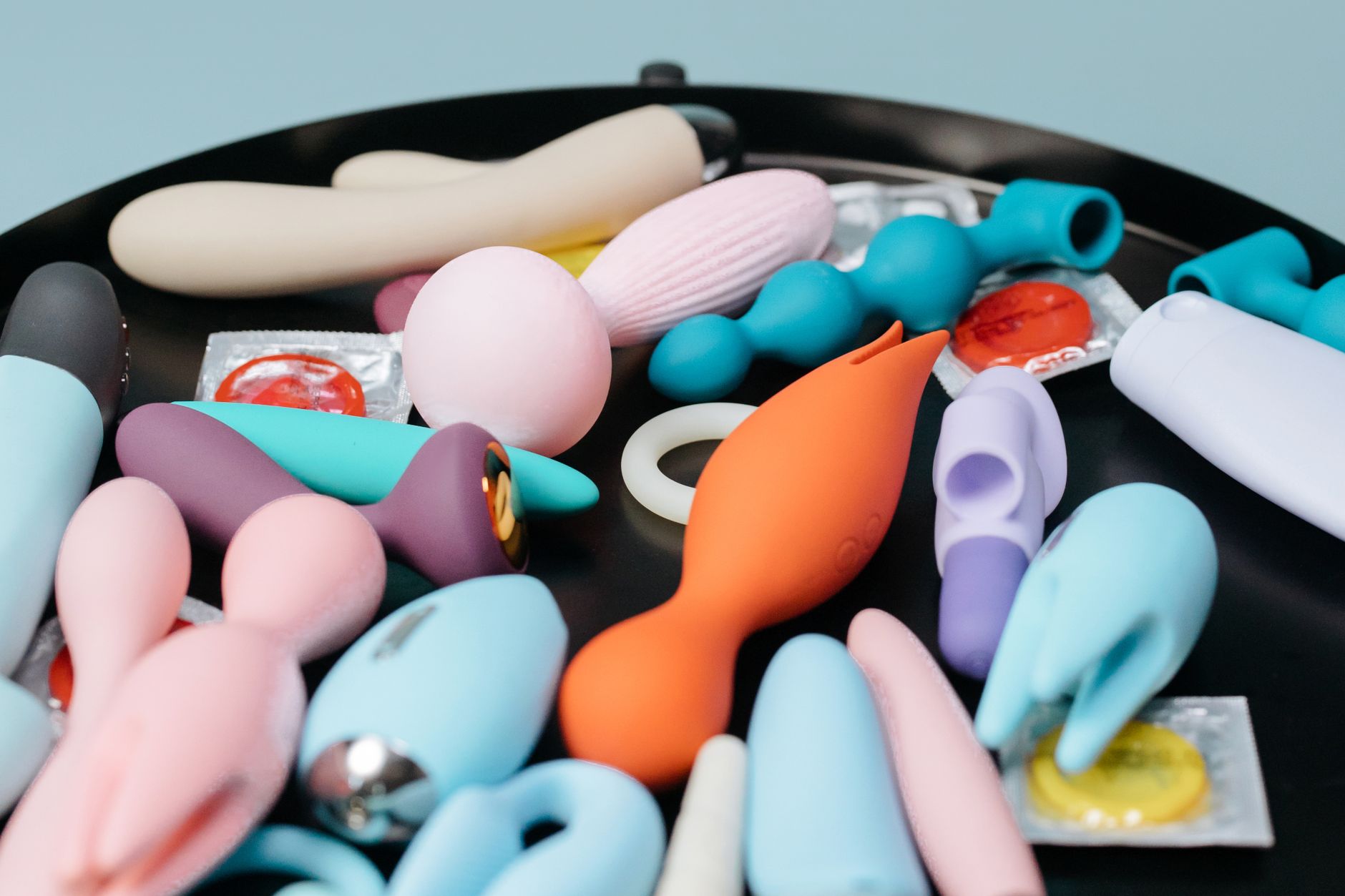
Photo by cottonbro studio on Pexels
Frequently asked questions
Q: Will using a vibrator alone make my partner feel like I don't want them?
Not if you talk about it first. Frame it as exploration, not avoidance. "I want to understand what actually feels good to me, so I can be more present with you." That's honest. Partners who feel included in the reasoning usually feel less threatened. And partners who watch you explore your own pleasure often find it incredibly sexy.
Q: How often should I use a lemon vibrator if I have lower sex drive?
There's no "should" here. This isn't homework. Use it when you want, as little or as much as feels right. The goal isn't frequency. The goal is reconnection with your own pleasure. Some weeks that's three times a week. Some weeks it's once. Both are fine.
Q: Can my partner use a lemon vibrator on me if I have lower libido?
Absolutely. This can actually be really helpful because it removes the pressure of your own arousal. They're controlling the stimulation, you're just receiving and noticing what feels good. It's lower-pressure than partnered sex but still intimate.
Q: What if my partner has lower sex drive and I'm the one who wants it more?
The same tools apply, just flipped. Don't push them to use a vibrator. But do create space where they can explore solo, pressure-free. And do talk directly about what's happening instead of letting resentment build. How to Use Lemon Clitoral Vibrators With a Partner Without Embarrassment goes deeper into the partner conversation if you need more concrete language.
Q: Is it normal to feel awkward introducing a vibrator to my partner?
Completely normal. This is an intimate conversation. You're essentially saying "I want to try something different." That feels vulnerable. But vulnerability is actually where real connection happens. Start small. Start solo. Normalize it for yourself first. Your comfort will come through when you talk about it.
Q: If I start using a lemon vibrator, will I become dependent on it for orgasms?
No. You're actually doing the opposite. You're learning what your body responds to. That knowledge transfers everywhere. Plus, suction-based vibrators like the Lem work with your body's natural response, not against it. They're not "too intense." They're just effective. That's not dependence. That's just knowing what works for you.
Q: How long before using a vibrator actually improves our sex life?
There's no timeline. But usually couples notice a shift in the first few weeks because the pressure starts to lift. And then, once they've had a few lower-stakes experiences with a vibrator, they often want partnered sex more because it's no longer attached to obligation. But this only works if you're also having the conversation and not just adding a toy and hoping it fixes things.
Desire mismatch is solvable. It just requires honesty, a bit of exploration, and tools that help you reconnect with what actually turns you on. A quality lemon clitoral vibrator isn't the whole answer, but it's often the practical reset couples need. Start there. Then keep talking.
If you want to dig deeper into rebuilding intimacy when desire has shifted, reach out to Hello Nancy Avo Shop. I'm here to help you figure this out.