
How to Use Lemon Clitoral Vibrators With a Partner Without Embarrassment
Here's the thing about bringing toys into a relationship
You're probably catastrophizing this moment more than it deserves. The conversation feels enormous because you've been rehearsing it in your head for weeks. But in the actual room, with your actual partner, it's usually just a few sentences followed by relief. I've worked with hundreds of couples navigating this exact transition, and the ones who move through it most smoothly share one thing: they stop treating it like a confession.
Introducing a lemon vibrator isn't an admission of inadequacy. It's an invitation.
Why the embarrassment hits different with a partner
Sex is one of the few places where we still believe we should be "enough" on our own. Using a toy with a partner can feel like admitting something's missing. That you need help. That your partner isn't doing the job. None of that's true, but the story is sticky.
The real reason embarrassment shows up is social. We've been told that good sex is spontaneous, intuitive, and happens without props. That relying on tools means something went wrong. That's not science. That's just narrative we inherited.
Here's what actually happens when you bring a lemon vibrator into partnered sex: you get better data about what works for your body, your partner learns your pleasure map more accurately, and you both stop guessing. That's an upgrade, not a workaround.
The timing conversation
Don't bring this up during sex. And don't bring it up when things are already rocky. The ideal moment is calm, clothed, and before you're supposed to perform anything.
Something like: "I've been curious about trying something new. I found this clitoral vibrator that I think could feel good for both of us. Want to explore it together?" That's it. No preamble. No apology.
If your partner immediately says yes, great. If they hesitate, that's data too. Some people need to warm up to the idea. Some have their own stories about toys. Make space for that without arguing your case. "What would help you feel comfortable with this?" is better than "But it will be so good."
Timing also matters logistically. Bring this up when you have at least 20 minutes to talk, not five minutes before bed when you're both exhausted.
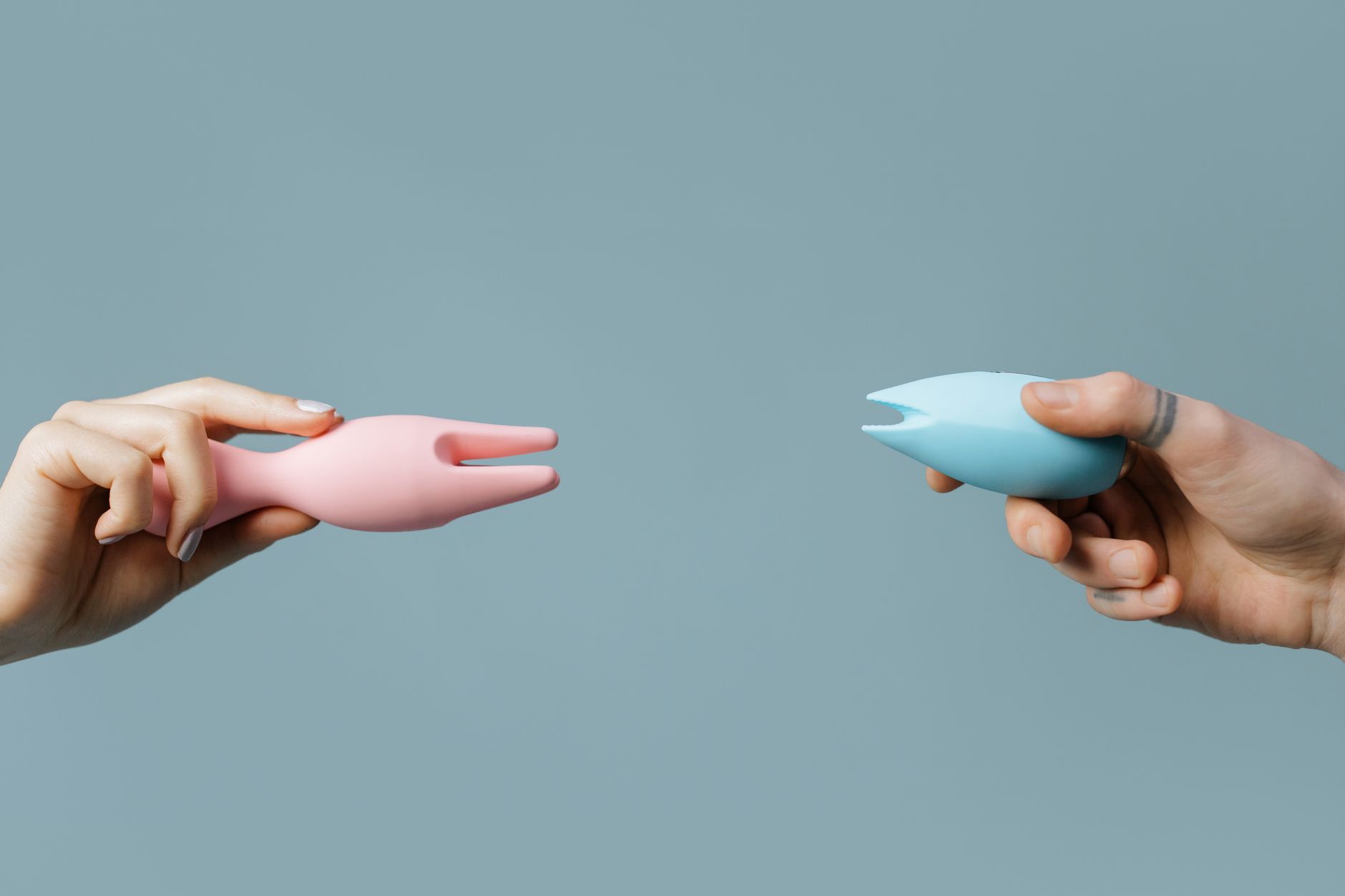
Photo by cottonbro studio on Pexels
The first time: what actually happens
You're probably imagining perfect arousal, perfect timing, perfect pleasure. Instead, the first time often feels a bit clunky. Someone giggles nervously. The angle is weird. You lose the moment because you're fussing with the toy. This is completely normal and doesn't mean anything is wrong.
Go in with low expectations. Treat it as an experiment, not a performance. "Let's see what this feels like" is a different energy than "This is going to blow your mind." One is collaborative. One is pressured.
Talk through it as you go. "A bit higher." "Slower." "Keep that rhythm." Your partner isn't a mind reader, and neither are you. If something feels off, pause. Water-based lubricant helps. So does being patient with yourself.
Many couples find that the second or third time goes infinitely better than the first. You've moved past the novelty anxiety. You know what the device does. You can actually relax into the sensation instead of bracing for something to go wrong.
How to position this so it's genuinely collaborative
A lemon vibrator isn't your toy. It's not your partner's toy. In the moment, it's ours. Ownership language matters here. If you talk about "my vibrator" and try to incorporate it, it can feel like you're doing something to yourself while your partner watches.
Instead, frame it as a shared experience. Your partner can hold it. You can guide their hand. They can experiment with pressure and rhythm while you give feedback. This isn't a solo project with an audience. It's partnered play.
Some couples find that the toy becomes a tool for extending arousal right before penetration. Some use it as the main event. Some rotate between manual stimulation and the lemon vibrator. There's no "right" way. You'll figure out what works through conversation and experience.
The conversation after
Once you've tried it, check in. Not in a clinical "How did that feel on a scale of one to ten?" way, but genuinely. "I liked when you..." "That felt weird when..." "Next time, I want to try..." These small feedback loops help both partners feel heard.
If your partner loved it, great. If they felt uncertain, that's also fine. Some people need a few tries to warm up. Some realize toys aren't for them, and that's legitimate too. The goal isn't to convince your partner this is amazing. The goal is to explore together without shame.
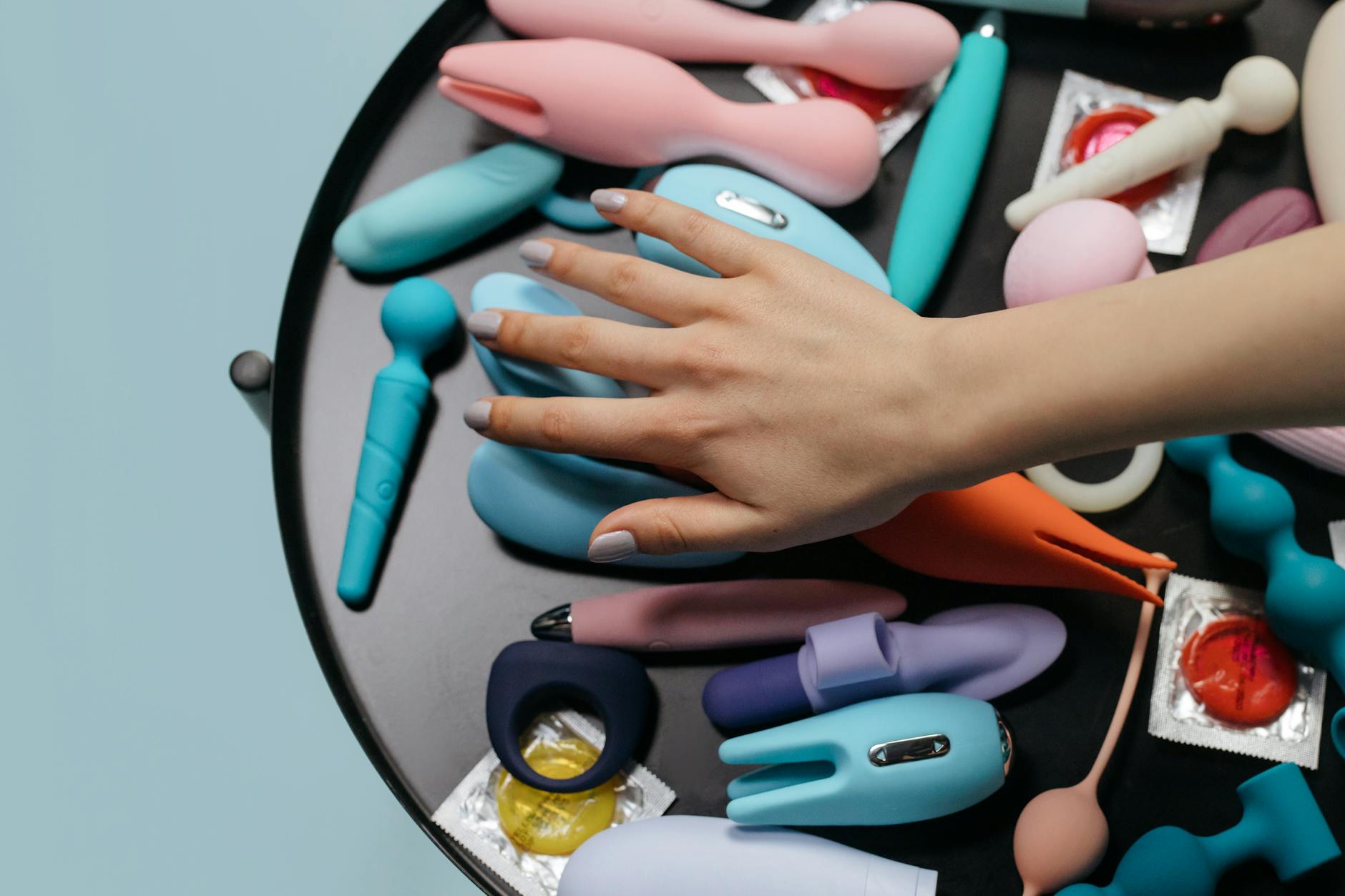
Photo by cottonbro studio on Pexels
When your partner suggests it first
If your partner brings this up, the embarrassment can flip. You might feel defensive. "Are you saying I'm not enough?" It's worth checking that story before you respond. Most people suggest toys because they want more pleasure for their partner, not less respect.
The invitation to use a lemon clitoral vibrator together is usually an invitation to deepen something, not to replace it. You can say yes without losing anything.
Building confidence as you go
The first few times will feel vulnerable. That's normal. By the fifth or sixth time, it's integrated. It's not a "special occasion" thing. It's just part of your repertoire. You'll stop thinking about it as introducing a toy and start thinking of it as another way you pleasure each other.
Confidence comes from repetition and from realizing that nothing catastrophic happened. Your partner didn't leave. The moment didn't shatter. You both still have affection for each other. In fact, you probably have a little more, because you trusted each other with something that felt risky.
If you're still feeling stuck, revisiting our guide on how to use lemon vibrators when you feel pressure to perform with a partner might help reframe the whole dynamic.
Troubleshooting the awkward moments
Someone makes a joke that lands wrong. The toy is noisier than expected. You lose arousal because you're overthinking. All of these are fixable. You can pause, laugh, adjust. Nothing has to be perfect.
If your partner seems resistant after the initial conversation, don't push. Some people need weeks or months of exposure to the idea before they're ready. You can leave the conversation open without making it a recurring argument. "If you ever want to try, I'm here for it" and then let it rest.
If you yourself are hesitant, that's worth examining too. Is it genuine disinterest, or is it anxiety? There's a difference. If it's anxiety, small steps help. Looking at images of lemon vibrators together. Ordering one and letting it sit visible for a while. Talking about what you'd want from the experience. Starting with suction after traditional vibration can also feel less intense as an entry point.
Why this matters beyond the immediate moment
This conversation is a template for other vulnerable conversations. If you can talk about wanting to use a lemon vibrator without shame, you can probably talk about other needs too. Emotional needs. Financial concerns. How you want to be touched or spoken to. The muscle you're building is direct communication about desire.
Relationships that thrive aren't the ones where nothing ever changes. They're the ones where both people feel safe suggesting changes. Where exploration is welcomed instead of feared. If you can create that safety around physical pleasure, it tends to ripple into other areas.
The actual mechanics of using a lemon vibrator with a partner
Once you're both ready, here's what helps. Start with your partner touching you manually until you're aroused. Then introduce the toy. The lemon vibrator (whether you're using the Lem or another quality clitoral vibrator) should feel like an enhancement, not a replacement.
Your partner can hold it while you guide the angle and pressure. Or you can hold it while they provide other stimulation. Experiment with intensity settings. Most people start at the lowest setting and work up, but some prefer to jump into the middle. There's no rule.
If it's overwhelming, pause. Use lubricant if the sensation feels too direct. Talk through what's happening. "The setting is too high." "I need a break." "That angle is perfect, keep it." All of this is communication, and it's sexy because it means you're actually present with each other instead of performing.
FAQ
Why do I feel more self-conscious using a toy with my partner than alone?
With a partner, there's an audience. Alone, you're not worried about being judged. Most of that fear is unfounded. Your partner likely wants you to experience maximum pleasure. Using a tool shows you value your own sensation, and that's actually attractive to most people. The embarrassment usually dissolves after the first time.
What if my partner thinks the toy is weird or emasculating?
That's a story he's learned, not a fact. You can gently push back. "I want more pleasure with you, not instead of you." If he's still resistant, you have options. You can give him time. You can explore the toy alone and casually mention how good it feels. You can ask what specifically concerns him and address that directly. Most resistance softens once people realize nothing threatens the relationship.
Is it normal to need a toy to orgasm with a partner?
Completely. Lots of people need clitoral stimulation to reach orgasm, and a lemon vibrator provides that more consistently than fingers or other manual methods. Using one isn't a sign of dysfunction. It's pragmatic.
How do I bring this up if we've never talked about toys before?
Start simple. You don't need a long preamble. "I've been curious about using a vibrator together. I think it could feel amazing for both of us." If that feels too direct, you can approach it through questions. "Have you ever thought about trying toys together?" The point is to name it without apology.
What if my partner immediately says no?
Respect that boundary. Don't argue or cajole. Instead, ask what specifically feels uncomfortable. Is it the idea of a toy in general? Concern about performance? Worry about where this leads? Different concerns need different responses. Some hesitation softens with information. Some is genuine "not for us," and you adjust.
Can using a toy actually improve our sex life?
Yes. It shifts the pressure off "performance" and onto "sensation." It opens conversation about what actually feels good. It introduces novelty, which many couples need to stay engaged. It also tends to feel collaborative in a way that builds intimacy. The research backs this up. Couples who use toys together report higher sexual satisfaction and better communication overall.
Moving forward
Introducing a lemon clitoral vibrator with a partner is scary in your head and manageable in reality. The conversation, the first time, the adjustment period. All of it is navigable if you approach it with honesty instead of shame. Your partner probably wants your pleasure as much as you do. Acting on that want, together, is the whole point.
If you need more support navigating relationship changes around pleasure and intimacy, reach out. We're here to help you build the conversations that matter.