
Here's the thing about birth control and arousal
Hormonal birth control does something nobody warns you about clearly: it doesn't kill desire. It muffles it. Your brain still receives arousal signals, but they're softer, slower to build, sometimes barely audible against the noise of everything else happening in your day. That's not a failing on your part. That's neurochemistry.
The catch is that most lemon vibrators and other clitoral toys are engineered for someone with a baseline surge of testosterone and dopamine. When hormonal contraception damps that down, the experience changes. The suction feels good. The sensations register. But that initial spark, that magnetic pull toward pleasure, takes longer to ignite.
What hormonal birth control actually does to arousal
When you're on the pill, patch, ring, shot, or hormonal IUD, synthetic progestin and sometimes estrogen are doing their job: suppressing ovulation, thickening cervical mucus, making the uterine lining hostile to implantation. But here's the part nobody mentions in the clinical explanation: those same hormones suppress circulating testosterone.
Testosterone is not a man's hormone. People with vulvas make it too, in smaller amounts, and it's a major driver of sexual motivation. When progestin mimics progesterone, it sends the signal to your pituitary gland: "Hey, we don't need testosterone right now." Your levels drop by about 30 to 40 percent, depending on the formulation. Some studies show even steeper declines with certain progestins.
The result: dopamine pathways that usually light up in response to erotic cues respond more slowly. Your nervous system is less reactive. You need more stimulation, more time, or more mental focus to reach the same level of arousal you might have off hormonal contraception.
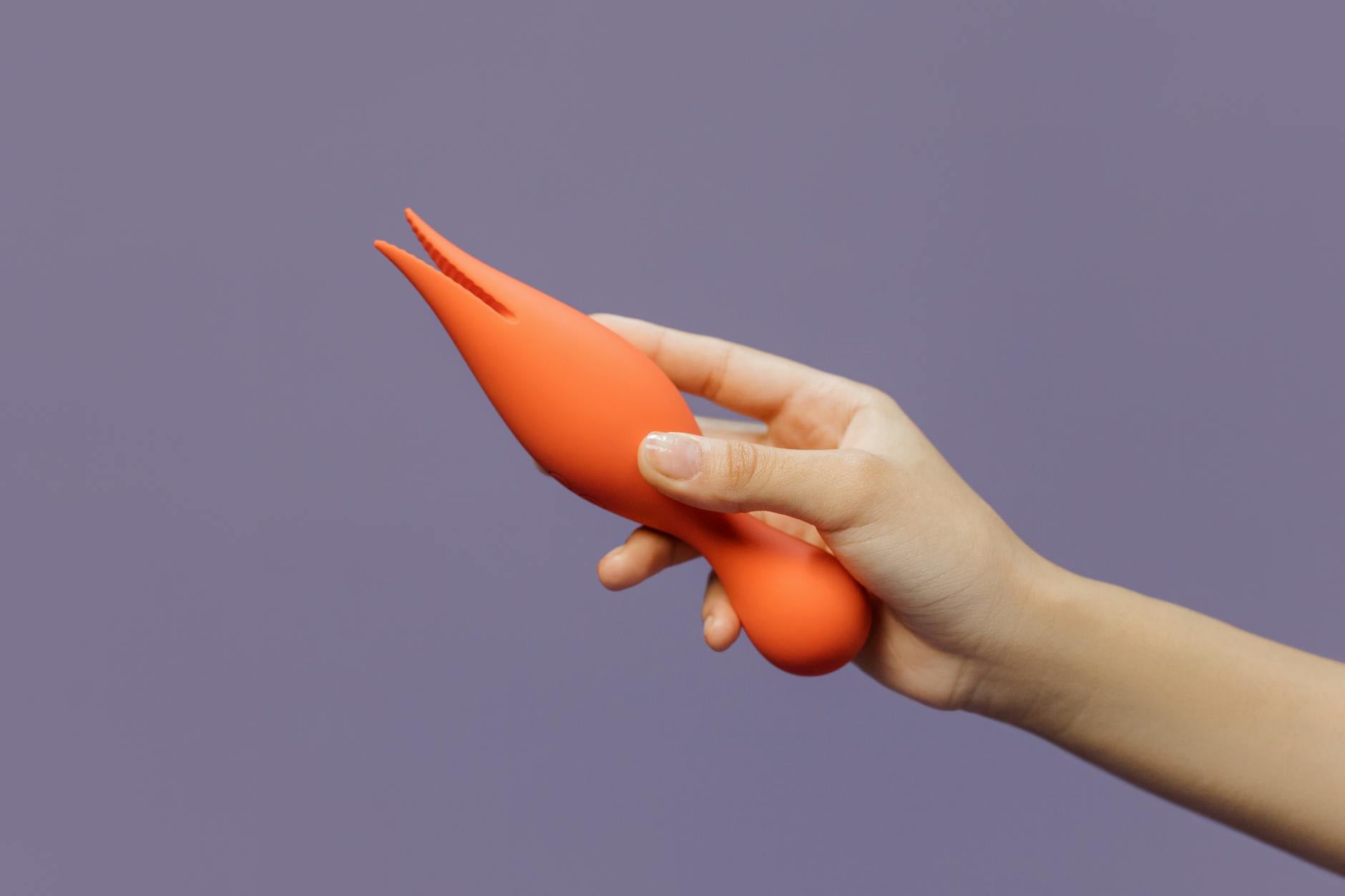
Photo by cottonbro studio on Pexels
Why lemon suction toys feel different with hormonal contraception
Lemon vibrators, including the Lem, work through air-suction technology. They create a gentle vacuum that stimulates nerve clusters without the friction or intensity of traditional vibration. The design is brilliant for people who find direct vibration overwhelming.
But suction technology relies on two things: responsive tissue and neural readiness. When you're on hormonal birth control, both shift.
First, your clitoral tissue is less engorged at baseline. Without the testosterone surge that happens in a natural cycle, blood flow to the genitals doesn't peak the same way. The clitoris stays slightly less full, slightly less sensitive. A lemon clitoral vibrator will still work, but it's working with less raw material to respond to.
Second, your brain's reward system is quieter. Normally, when you start touching yourself or when your partner touches you, a cascade of dopamine and norepinephrine kicks in, amplifying sensation and desire. That cascade is muted on hormonal contraception. So the suction sensation registers, but it doesn't pull you into arousal the way it might otherwise.
The lemon sucker still feels good. You can still orgasm. But the timeline stretches. What might have taken 5 to 10 minutes now takes 15 to 25.
How to adapt your arousal timeline on the pill
Three strategic shifts make a real difference:
Extend your warm-up window. Budget 20 to 30 minutes for your body and brain to catch up, rather than expecting arousal to follow the old timeline. This isn't defeat. It's working with your neurochemistry instead of against it. Many people find this slower tempo actually deepens pleasure because there's less pressure and more room to explore sensation.
Use mental focus intentionally. Arousal on hormonal birth control is often more cognitive than instinctive. That's not a bug. Use it. Read erotica beforehand, watch something that genuinely turns you on, or spend a few minutes thinking through a scenario you find hot before you start. Get your prefrontal cortex engaged before you expect your nervous system to follow.
Layer stimulation. Start with the lemon vibrator on lower settings, but also add touch elsewhere. Nipple play, internal penetration, or hand stimulation of the vulva while the Lem works the clitoris. When you're on hormonal contraception, compound stimulation works better than single-source focus.
When to consider a different contraceptive method
If you're on hormonal birth control and your arousal has tanked to the point where sex feels like a chore, it might be worth exploring alternatives with your doctor. Not every birth control formulation suppresses testosterone equally.
Some people find that lower-dose pills, or switching progestins, makes a difference. Others respond better to non-hormonal methods like copper IUDs, diaphragms, or condoms paired with tracking or spermicide. The copper IUD in particular preserves your natural hormonal cycle entirely, which is why some people report a dramatic return of desire after switching from hormonal methods.
This is a conversation worth having, especially if your baseline desire has shifted since starting a contraceptive. A gynecologist or sexual health specialist can help you weigh the trade-offs between contraceptive reliability and your sexual experience.
The role of psychological readiness
Here's what doesn't get talked about enough: hormonal contraception doesn't just change your body's arousal chemistry. It also changes what you're carrying in your head.
When you're on reliable birth control, the fear of pregnancy vanishes. For some people, that relief unleashes pleasure. For others, that same absence of stakes somehow mutes motivation. You're protected. You're safe. And paradoxically, safety can feel less urgent than risk used to feel.
If this rings true for you, it's not something a lemon vibrator can fix directly. But it's worth noticing. Sometimes re-energizing desire on birth control means creating new reasons to want sex: quality time with a partner, specific fantasies you haven't explored, or simply deciding that pleasure is worth scheduling attention for, the way you'd schedule a workout.
When lemon vibrators shine on hormonal contraception
Despite the slower build, lemon clitoral vibrators actually have some advantages on hormonal birth control.
Because arousal takes longer, you're less likely to rush. The suction technology of the Lem or other lemon adult toys works beautifully in a slower, more exploratory context. You can spend 20 minutes experimenting with different patterns, intensities, and rhythms in ways you might not if you were already at peak arousal within 90 seconds.
Many people find that orgasms achieved on a slower timeline feel richer, more full-bodied. The Lem's ability to stimulate without the sometimes-overwhelming intensity of vibration means you can reach that peak without the numbness or desensitization that can happen with more aggressive stimulation.
Also, if you're partnered, the extended warm-up creates space for connection. Instead of a quick solo session, you have room for foreplay, conversation, playfulness. That's not a consolation prize. That's actually where a lot of real pleasure lives.
Communicating the shift to your partner
If you're in a partnership and you've noticed arousal feels different since starting hormonal birth control, telling your partner matters. Not as an apology, but as information.
"I need more warm-up time" is a different conversation than "I'm not attracted to you anymore" (which is what silence often communicates). The first is solvable. The second sounds like a relationship crisis.
If you're using a lemon vibrator partnered, you might try integrating it into foreplay rather than as a solo tool. Let them watch, let them help. The act of being observed during pleasure can trigger a separate dopamine pathway that partially compensates for the testosterone dip. You might also find that using the lemon suction toy during sex, when your partner is inside you, creates a sensation profile that feels entirely new and more arousing than either method alone.
The data on birth control and sexual satisfaction
Studies on hormonal contraception and desire show a complicated picture. About 15 to 20 percent of people report decreased libido on hormonal birth control. Another 30 to 40 percent report no change. And 40 to 50 percent report either no change or even increased desire (often because pregnancy anxiety is gone).
What that means: your experience is real, and it's also not universal. Some people genuinely do better on the pill. Others suffer. The science says the effect is mediated by baseline testosterone, individual sensitivity to progestin, relationship quality, stress levels, and honestly, things we don't fully understand yet.
If you're struggling, you're not imagining it. And you don't have to accept permanent low desire as the trade-off for reliable contraception. Switching methods, adjusting doses, timeline expectations, or tools like Hello Nancy's lemon vibrators can all help bridge the gap.
Key takeaways
Hormonal birth control mutes arousal signals by suppressing testosterone. This doesn't mean you can't orgasm or that pleasure disappears. It means the timeline stretches, and your nervous system needs different inputs to reach the same destination.
Lemon vibrators like the Lem still work beautifully on hormonal contraception. They work better when you extend your warm-up window, add mental focus, and layer stimulation. If desire has truly flatlined, talking to your doctor about alternative methods is worth the conversation.
Most importantly: this is a biological shift, not a personal failing. Your body isn't broken. Your contraception is just asking you to work with a different rhythm. And honestly, that rhythm often leads to deeper, more intentional pleasure.
People also ask
Does hormonal IUD affect arousal the same way as the pill?
Similarly, but slightly less intensely in some cases. A hormonal IUD (Mirena, Kyleena, Skyla, Liletta) releases progestin directly into your uterus with some systemic absorption into the bloodstream. You get less total hormone exposure than with a pill, so testosterone suppression is sometimes milder. That said, many people on hormonal IUDs still report changes in arousal timing. Non-hormonal copper IUDs (Paragard) don't affect hormones at all and are worth discussing if arousal changes bother you.
Can switching birth control pills help restore arousal?
Yes, sometimes significantly. Different progestins have different potencies and different effects on testosterone. If you're on a pill with a stronger progestin, switching to one with a milder formulation (or to a lower-dose pill) can help. Your gynecologist can discuss options. Some people also find that taking a monthly break from the pill (with backup contraception) restores arousal temporarily.
Will a lemon vibrator work if I've been on hormonal birth control for years?
Absolutely. Long-term hormonal contraception doesn't fundamentally change your body's capacity to respond to stimulation. It changes the ease and speed of arousal. A lemon clitoral vibrator will still create sensation and orgasm. You'll just need to give yourself the time and conditions for arousal to build. Many long-term pill users find that suction toys like the Lem actually work better than vibration because they require less baseline arousal to feel good.
If I go off hormonal birth control, will my arousal return immediately?
Often, but not always instantly. Testosterone levels can take a few weeks to a few months to fully rebound, depending on how long you were on hormonal contraception. Many people notice a shift within 2 to 4 weeks of stopping. Others take longer. Your cycle (if you have one off hormones) will also restart, which brings back the monthly testosterone surge that many people find energizing.
Does the type of lemon vibrator (pattern, intensity) matter more on birth control?
Yes. On hormonal contraception, lower-intensity patterns and longer, gentler cycles often feel better than the most intense settings. The Lem's suction-based design is particularly well-suited because it doesn't require as much baseline arousal to feel pleasurable. Start at patterns 1 or 2 and let yourself explore upward rather than jumping to the highest intensity.
Can I use a lemon vibrator during sex on hormonal birth control to increase arousal?
This is one of the best strategies, honestly. Using a lemon clitoral vibrator during partnered sex, especially during penetration, can trigger additional sensation pathways that help you reach arousal faster. Many people find that the combination of internal sensation and suction stimulation works around the arousal lag that hormonal contraception creates. Try using it before penetration to warm up, or during, depending on positioning and comfort.
References
Aulick, A., Abdullatif, H., & Roenneburg, S. (2023). Hormonal contraceptives and sexual function. Sexual Medicine Reviews, 11(2), 107-119.
Strufaldi, B., Pompei, L. M., Steiner, M. L., et al. (2003). A comparison of the effects of hormonal and non-hormonal contraceptives on mood and sexual satisfaction. Contraception, 67(5), 369-376.
Mason, N. V., Iribarren Djaló, E., & Davis, A. (2022). Progestin effects on sexual desire across contraceptive formulations. Journal of Sexual Medicine, 19(4), 612-623.
Acele, K. N., & Karan, A. (2021). Testosterone suppression in hormonal contraception: mechanisms and clinical implications for sexual health. Reproductive Health, 18(47), 1-12.