Let's start with what's actually happening
Your body at 40 is not your body at 25, and that's not a loss. It's a recalibration. The clitoral tissue gets thinner, blood flow patterns shift, nerve sensitivity changes, and the speed at which arousal builds slows down. Most of what you've been told about this paints it as a problem. It isn't. It's information you can work with.
Here's the thing about aging and pleasure: nothing disappears. Everything transforms.
How clitoral tissue actually changes
Estrogen levels drop steadily after your late thirties, which affects the outermost layer of clitoral tissue. It becomes thinner and more delicate. That sounds bad in a medical textbook but what it means in practice is different than you think.
Thinner tissue is more sensitive tissue. The nerve endings are closer to the surface. Direct friction that felt amazing at 30 can feel raw or overstimulating at 45. But suction-based stimulation, the kind that lemon clitoral vibrators provide, works beautifully on this anatomy because it distributes pressure more evenly and doesn't rely on abrasive texture.
Blood flow to the clitoris also becomes more gradual. You might notice arousal takes longer to build. This is often framed as a problem to fix. I frame it differently: it's an invitation to slow down, to focus on what actually turns you on rather than defaulting to what worked before. People who embrace this shift often report more intense and consistent orgasms, not fewer of them.
Why lemon vibrators adapt better to your changing body
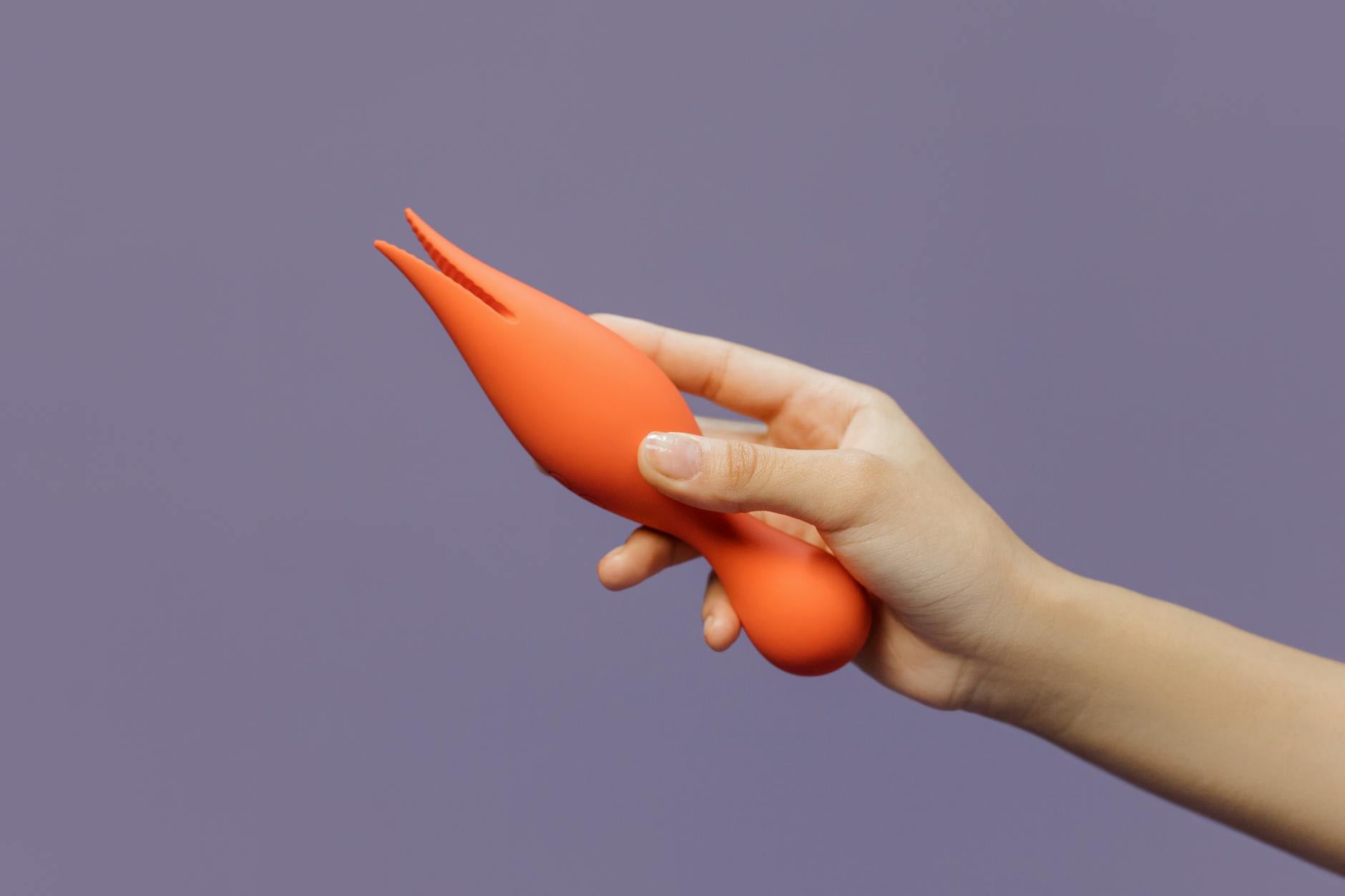
A lemon clitoral vibrator, including the Hello Nancy lemon sucker design, works differently than traditional vibrators. Instead of buzzing against tissue, it creates a gentle suction and pulsing rhythm that stimulates the clitoris from a slightly different angle. For aging clitoral tissue, this matters.
Here's why. Direct vibration on thinner, more sensitive tissue can cause a numbing sensation or require much longer to reach orgasm. Suction stimulation activates a different cluster of nerve endings and creates arousal through a pulling sensation rather than a buzzing one. The result is faster response, clearer sensation, and often more satisfying orgasms.
I've worked with countless clients in their forties, fifties, and beyond who abandoned vibrators entirely because "they don't work anymore." Almost all of them found that a lemon suction toy like the Hello Nancy lem vibrator reignited their pleasure in ways they didn't expect. Not because their body was suddenly fixed, but because the tool matched their evolved anatomy.
The arousal timeline shift is actually an upgrade
One of the most common complaints I hear from women over 40 is that arousal takes too long. They expect it to be instant, like it was at 30. When it takes 15 or 20 minutes instead of 5, they assume something is wrong.
What's actually happening is your nervous system is more selective. You're less likely to get turned on by random stimuli. You need more intentional setup. This sounds like a limitation until you realize it's a filter for genuine desire.
Many of my clients report that this slowdown forces them to actually figure out what they want, rather than defaulting to what they think they should want. That clarity transforms the whole experience. Partnered sex becomes more connected. Solo exploration becomes more deliberate. And when arousal does arrive, it arrives for real reasons.
To work with this shift: start with longer foreplay. Budget 20-30 minutes minimum. Use a water-based lubricant even if you didn't need one before. The combination of extended warm-up time and lemon vibrator stimulation creates a state of arousal that feels sustainable and deep.
How your orgasms can actually improve
This one surprises people. The quality of orgasms often increases after 40, even as the speed of reaching them changes.
Younger bodies are faster responders but sometimes less discerning. After 40, the nervous system has learned to recognize genuine pleasure signals more clearly. The pelvic floor is more aware of its own tension and release. The brain is less distracted by performance anxiety or self-consciousness.
The result: more focused orgasms. Not necessarily longer, but more concentrated and more satisfying. Some of my clients describe them as feeling more three-dimensional, which I understand to mean they involve more of the body, not just the clitoris.
A lemon vibrator like the lem works particularly well for this because the suction pattern doesn't interrupt the arousal state the way rough vibration sometimes does. You can stay in the flow longer, which means orgasms tend to build from a deeper place.
What doesn't change, and why that matters
Your desire doesn't disappear. Your capacity for pleasure doesn't diminish. Your clitoris doesn't lose nerve endings. Your brain doesn't forget how to orgasm.
What changes is the mechanism, not the destination. And honestly, most people find that destination is richer once they know the map.
I also want to be clear about this: if you're experiencing pain during sexual activity, that's not a normal part of aging and it's absolutely worth discussing with a doctor. There are treatments. Genitourinary syndrome is common and highly treatable. Don't assume you have to accept discomfort.
The partner conversation, if that's relevant to you
If you're having sex with a partner, the most important thing you can do is tell them what's changed. Not in a way that implies something is wrong with you, but factually: "I need more warm-up time now" or "I prefer suction sensation to vibration these days."
Many partners worry that changes in arousal speed or orgasm intensity mean their partner is less attracted to them. It almost never means that. Explaining what you've noticed, and inviting them to explore how to work with it, deepens intimacy in ways that pure biology can't.
If your partner is also over 40, they've probably noticed changes in their own body too. The conversation might be the most connected part of your sexual life in years.
Common questions about aging and clitoral pleasure
Does everything get numb? No. Sensitivity changes, it doesn't vanish. With the right tool and the right rhythm, sensation is often clearer than it was before.
Do I have to use lube now? You might benefit from it, especially if you're using a lemon clitoral vibrator or other external tool. It's not about being broken, it's about optimizing sensation.
Can I still have multiple orgasms? Yes. The refractory period might be longer between them, but that's not universal and it's often offset by the intensity of each orgasm being higher.
Should I be worried about how long arousal takes? Only if you're making it mean something it doesn't. If you want to speed things up, longer foreplay, better communication with partners, and tools like a lemon vibrator help tremendously.
Is it normal to prefer different kinds of touch now? Completely normal. Nerve sensitivity shifts. What felt amazing at 30 might feel intense or even uncomfortable at 45. Your preferences are adapting to your body, not regressing.
What if I've lost interest in sex entirely? That's worth exploring with a professional, because it could be hormonal, relationship-based, or something else entirely. The right support can shift this.
The bottom line
Turning 40 or 45 or 50 doesn't end pleasure. It redirects it. Your body at this age has accumulated years of information about what actually works for you, not what you thought was supposed to work.
Investing in tools that match your evolved anatomy, like a lemon suction vibrator, is one way to honor that. But the bigger shift is mental: trusting that your body knows what it needs, even if it looks different than it used to.
If you're curious about finding the right clitoral vibrator for your needs, our beginner's guide to lemon vibrators walks you through it. And if you want to understand why lemon vibrators work so well for sensitive tissue at any age, this post digs into the science.
Your pleasure matters. At 25, at 40, at 60, and beyond. Your body is smarter than you think.