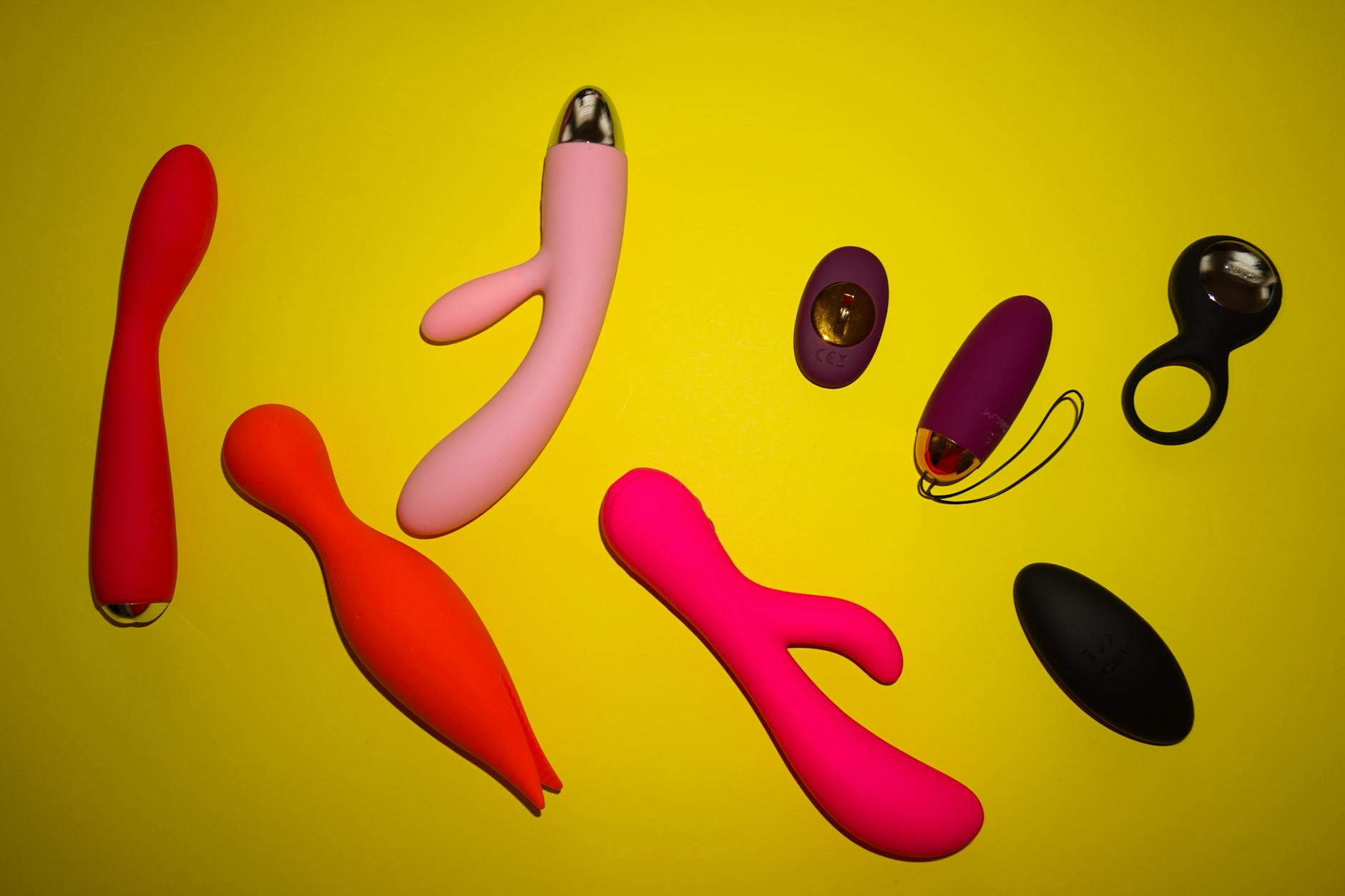
Let's start with the contradiction
You know your body. You know exactly what pressure feels good on your clitoris when you're alone. Then your partner touches you with the same vibrator at the same setting, and suddenly it feels wrong. Not bad wrong, but like someone turned up the volume without asking. So you reach down, dial it back, and things settle into place again.
This isn't you being inconsistent. Your body is responding to something real. Solo arousal and partnered arousal are neurologically different experiences, and they demand different settings on your lemon vibrator.
How your nervous system changes with a partner present
When you're alone, your sympathetic nervous system runs the show. That's your fight-or-flight circuitry, yes, but it's also your pleasure circuitry. You're in control. Your attention is focused entirely inward. Arousal builds in a relatively linear way, and you can dial intensity up or down moment by moment without negotiation.
The second another person enters the picture, your parasympathetic nervous system activates. This is your rest-and-digest mode, and it's also your social engagement system. You're now processing their touch, their breath, their presence, their feedback about whether they're enjoying this. Your brain is dividing attention between internal sensation and external connection.
This split focus changes everything about how stimulation registers. Research in couples therapy and neuroscience shows that partnered touch activates different neural pathways than solo stimulation, even on identical body locations. You're literally experiencing two different kinds of arousal at the same time.
Why the same intensity feels overwhelming with a partner
Here's the practical part. When you're flying solo with your lemon vibrator, you're operating at full focus. Every ounce of neural real estate is devoted to sensation. You can handle a higher intensity setting because your brain isn't context-switching.
With a partner, you're splitting bandwidth. Half your attention (at least) is social. You're tracking their movements, reading their cues, staying aware of consent and rhythm. That's not a problem. That's connection. But it does mean the same physical intensity now has less room in your cognitive load. A setting that felt perfect alone now feels like it's intruding on your ability to stay present.
Another layer: anticipation operates differently. Alone, you build arousal by controlling the pace. With a partner, arousal often comes from not knowing exactly what happens next. That unpredictability heightens sensitivity. A medium setting with a partner can feel as intense as a high setting solo because your nervous system is already running hotter from the uncertainty and novelty.
The sensory interference problem
Lemon vibrators work through suction and vibration combined. That's powerful stimulation. When you're alone, you're managing that single input. Your clitoris is receiving suction, and your brain is processing it in isolation.
Add a partner, and you've introduced competing sensory information. Their hands, their mouth, their body against yours, their voice, their rhythm. Your clitoris is now receiving multiple forms of input simultaneously. The lemon vibrator isn't the only thing demanding attention anymore. Even at the same settings, it can feel intrusive rather than integrated.
I see this constantly in couples I work with. A partner will start using the vibrator on their partner and set it to the same level that their partner uses solo. Within seconds, they hear "can you lower that?" The partner isn't being fussy. Their sensory system is genuinely overwhelmed because it's processing tactile information from multiple sources.
Pressure settings that actually work
If you typically use a lemon clitoral vibrator at setting 5 or 6 when you're alone, try starting at 2 or 3 with a partner. Let arousal build slowly. You can always increase it as sensation integrates and your nervous system adjusts.
Here's a rhythm that works well. Start low. Build for several minutes. Let your body synchronize with your partner's presence and touch. Once you feel fully present (not distracted, not working to stay focused), increase by one setting. Pause again. Notice what changes. Most couples find there's a "sweet spot" that's about 1-2 settings lower than solo preference.
The other adjustment: focus on pattern rather than intensity. A lemon vibrator on a lower setting but using a varied pattern (if your device has one) often delivers more pleasure than maximum intensity at a flat rhythm. The variation keeps your nervous system engaged without overwhelming it.
When higher intensity actually works better with a partner
Not everyone wants to dial down. Some people find that partnered touch actually allows them to tolerate or even crave higher intensity because they feel safer, more grounded, or more held.
If you're someone who feels more aroused with a partner present, you might not need to reduce settings at all. You might even prefer to increase them because the emotional safety or novelty elevates your arousal ceiling. This is completely normal. The rule isn't "always lower intensity with a partner." The rule is "your nervous system changes, so your settings might too."
Pay attention to what your body is actually telling you, not what you think it should want. If you're reaching down constantly to adjust, something isn't matched to your current state. If you're relaxed and fully present, you've probably found the right setting.
Communication that actually works during partnered use
Here's what I'd avoid: "That's too much" in the middle of things. It works, but it can interrupt flow and create a little moment of self-consciousness.
What works better: establish a simple system beforehand. "If I touch your hand, dial it down one." Or "I'll tell you if I want to go higher." Or honestly, "Let's start at 3 and see how it feels." The conversation happens before arousal peaks, so it doesn't feel like correction.
Another option: take turns. You use the vibrator on your partner at your preferred setting. They use it on you at your preferred setting. You're both getting exactly what your nervous system needs, without negotiation in the moment.
Read more about how to navigate these dynamics in how to use lemon vibrators when your partner thinks toys kill spontaneity. The communication patterns there apply directly to pressure settings too.
The body keeps score
Muscle memory matters. If you always use a lemon vibrator solo at high intensity, your clitoris becomes sensitized to that level of stimulation. It can feel "normal" to you but overstimulating to someone else, or when your nervous system is divided.
Similarly, if you primarily use it with a partner at lower settings, your body adapts to that input. Switching to solo play at your original intensity might feel jarring at first.
This isn't a problem. Your body is just being smart about context. But it does mean that if you switch between solo and partnered play regularly, you might benefit from a brief warm-up period at each intensity shift. Don't jump straight to your usual setting. Let arousal build first, then add intensity.
What the research actually shows
Studies on partnered versus solo arousal patterns consistently show that the same physical stimulus registers differently depending on whether you're alone or with someone. Neuroimaging studies reveal distinct patterns of activation in the insula and anterior cingulate cortex (the regions processing both sensation and emotional context) when partnered touch is involved. It's not subjective. It's neurobiology.
One small pilot study on clitoral stimulation devices found that people using the same device solo versus with a partner reported needing different intensity levels about 60% of the time. Most adjustments involved lowering intensity with a partner, but about 20% of participants preferred higher intensity in partnered contexts.
The takeaway: there's huge individual variation. But the fact that variation exists is consistent. You're not broken if your settings change depending on context. You're normal.
FAQ
Why does my clitoris feel more sensitive when my partner is using the lemon vibrator on me?
Your nervous system is in a different state. With a partner present, your body is processing multiple types of input simultaneously. Even at the same vibrator setting, the clitoral tissue registers the sensation differently because your brain's attention is divided between internal sensation and external connection. This heightened sensitivity is actually your parasympathetic nervous system doing its job.
Can I train my body to tolerate the same intensity solo and partnered?
Sure, but the real question is why you'd want to. The whole point of having different settings is that your body is smart about context. If you're curious, you can gradually increase partnered intensity by 0.5 settings every few sessions. But there's nothing wrong with your body naturally preferring lower settings with a partner. That's healthy adaptation.
Does this pressure difference mean my partner isn't using the vibrator correctly?
No. It means your nervous system is responding appropriately to a different context. If your partner is listening to your feedback and adjusting, they're doing it right. The vibrator isn't the variable. Your arousal system is, and that's completely normal.
Should I always start lower when introducing a lemon clitoral vibrator to partnered play?
Yes, it's the safe default. You can always increase intensity. You can't easily recover if you start too high and overstimulate. Start at 2 or 3, build arousal for several minutes, then increase by one level. This gives your nervous system time to integrate the sensation with the partner's presence.
What if my partner prefers higher intensity than I do?
Then you're using different settings. This is totally fine. Some couples keep their own device, or they agree on settings beforehand. "I'll use yours on you at 4, you use mine on me at 3." No negotiation required. You're both getting what your bodies need.
Does this apply to all vibrators or just lemon vibrators?
It applies to all vibration-based devices, but lemon vibrators (with their suction mechanism) can feel especially intense when you're already at higher arousal. The same principle holds though: your nervous system changes with a partner present, so your settings might too.