
Let's start with what you're actually experiencing
You switched birth control, or started it for the first time, and now your body feels like someone turned down the volume on everything. Orgasms take longer. Arousal is sluggish. Touch that used to spark something now feels distant. And the worst part? Everyone acts like this isn't real.
It's real. It's also temporary. But right now, that doesn't help much.
What hormonal birth control actually does to sensation
Hormonal birth control reshuffles your neurochemistry. Progestin and estrogen levels flatten out compared to your natural cycle, which changes dopamine and norepinephrine production. These are the chemicals that drive desire and amplify physical sensation. Lower levels, slower arousal. Slower arousal feels like numbness when you're used to feeling more responsive.
There's also a vascular component. Estrogen affects blood flow to the clitoris and vaginal tissue. Some pills reduce blood flow slightly, which delays the engorgement that creates sensitivity. This is particularly true of progestin-heavy formulations. Switching to a lower-dose or different progestin can sometimes help, but the first few months are always an adjustment.
Here's what's NOT happening: your capacity for pleasure isn't gone. Your nerve endings haven't disappeared. Your brain's reward circuits are still functional. You've just got a temporary mismatch between expectation and sensation, and that psychological gap is making everything feel more muted than it actually is.
The timeline you can expect
Three months is the baseline for hormonal adjustment. Your body needs roughly three cycles to stabilize on a new birth control regimen. Some people feel normal again in 6-8 weeks. Others take a solid four months. A few need to switch formulations entirely.
The numbness you're feeling right now is at its worst in weeks 2-4, typically. That's when hormonal fluctuation is most pronounced. By month two, most people notice incremental improvements. By month three, many report that sensation is creeping back.
But here's the catch: if you're stressed, tired, or dealing with relationship friction, that timeline stretches. Psychogenic factors amplify perceived numbness. Stress hormones suppress dopamine and kill arousal. Fatigue makes sensation feel muted. Poor communication with a partner adds cognitive load that's hard to separate from physical numbness. If you're dealing with multiple stressors, the adjustment period could be 4-6 months instead of 3.
How lemon clitoral vibrators bridge this gap
Unlike traditional vibrators, lemon sexual toys like the Lem use gentle suction and pulsation patterns that don't require heavy baseline sensation to work. They compensate for reduced blood flow and slower nerve signaling by delivering consistent, focused stimulation that gradually trains your nervous system to respond again.
Here's why that matters: when arousal is slow to build, your nervous system gets discouraged. You try, nothing happens, you give up. Lemon clitoral vibrators short-circuit that feedback loop. They provide reliable sensation even when your baseline responsiveness is low. Over time, that reliable stimulation helps retrain your arousal response.
The suction mechanism is key. It doesn't rely on direct vibration, which can feel overwhelming or numb-inducing when you're already experiencing numbness. Instead, it creates a gentle vacuum that mimics oral sex. This engages different nerve pathways and blood vessels than vibration alone, which often feels more effective during the post-birth-control adjustment window.
The three-phase adjustment strategy
Phase One: Exploration without expectation (weeks 1-3).
Turn the Lem on to pattern 1 or 2. Low intensity. Let it run for 5-10 minutes without focusing on orgasm. You're not trying to feel pleasure right now. You're reintroducing sensation. Notice where you feel it. Notice the difference between patterns. Do this solo, when you have zero time pressure. The goal is 15-20 minutes of low-stakes exploration, three times a week.
Many people expect to feel something immediately and panic when they don't. Reset that expectation. You're building neural pathways again. It takes repetition.
Phase Two: Graduated intensity (weeks 3-8).
Once you've done a few sessions at patterns 1-2, start varying within that range. Spend five minutes at pattern 2, then move to pattern 3. Let the lemon clitoral vibrator stay on each pattern for 2-3 minutes. You're teaching your nervous system to recognize and respond to increased sensation. Don't jump to high patterns yet. The temptation is to crank it up and force arousal. That backfires.
Add a longer warm-up. Birth control hormones slow everything down, so give yourself a full 10-15 minutes of touching, teasing, anticipation before you turn the device on. Your brain needs time to prime your body. The suction device will work better when arousal has even a foothold.
Phase Three: Recalibration (weeks 8-12).
By now, you should notice sensation returning in waves. Some sessions feel almost normal. Others still feel muted. That's completely fine. You're not starting over. You're stabilizing. Now you can experiment with higher patterns and different pressure placements. You might discover that the Lem works better at a slightly different angle than before.
At this phase, many people also notice that partnered sex feels different. Talk about it. Numbness in solo sessions doesn't mean numbness with a partner, but if you're both noticing a shift, that's worth addressing directly. Longer foreplay, different positions, more focused attention to arousal cues. Birth control adjustment affects both people in the relationship, even though only one person's hormones changed.
What to do if numbness persists past month four
If you're still feeling completely flat by week 16, you might be on a formulation that's not right for you. Some people's neurochemistry just doesn't tolerate certain progestins. This isn't failure. It's useful information.
Talk to your prescriber about switching to a different birth control type. Lower-dose pills, different progestin, the mini-pill, an IUD, or a different delivery method (patch, ring, shot) all have different hormonal profiles. What tanks sensation in one person might be fine for another.
Alternatively, if the numbness is coupled with mood changes, brain fog, or loss of desire that feels emotional rather than physical, that's also worth discussing. Some formulations affect mental health more than others. You deserve to feel like yourself.
Using lemon vibrators with a partner during the adjustment
Introduce the device as a tool, not a workaround. "I'm using this to help my body adjust to the hormonal change" is a different conversation than "I need this to feel anything anymore." The first is practical and collaborative. The second can feel like rejection.
Use it together. Let your partner hold the Lem sometimes. Let them see that you're interested in pleasure, that you're not shutting down sexuality, you're just adapting. Many partners worry that birth control side effects signal relationship problems. Demonstrating active engagement with your own sensation eases that anxiety.
Don't rush to partnered sex with the device immediately. Solo exploration first. Once you understand how the lemon clitoral vibrator works on your body, then experiment with incorporating it into partnered play. That way, you're not learning the device AND navigating partner dynamics at the same time.
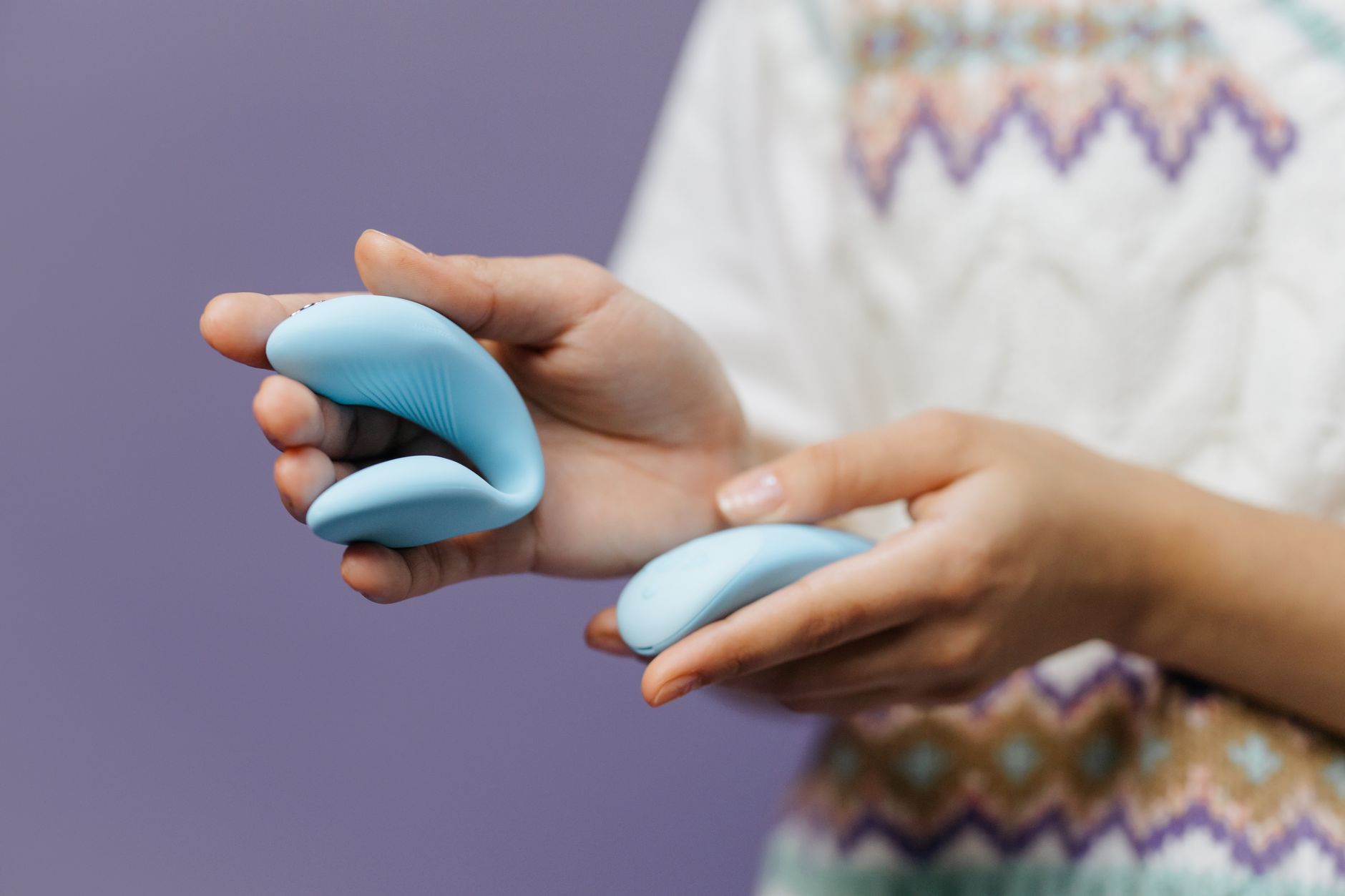
Photo by cottonbro studio on Pexels
The psychological piece nobody talks about
Birth control numbness carries emotional weight. You expected to feel fine. You didn't. Now you're questioning whether this was worth it, whether your body will ever feel normal again, whether you're broken. All completely understandable. Also completely unhelpful.
Your body isn't broken. It's adapting. But the psychological narrative around that adaptation matters. If you frame it as temporary adjustment, your nervous system relaxes and sensation returns faster. If you frame it as permanent loss, your brain goes into protective mode and sensation stays muted longer. This isn't woo. This is neuroscience.
Consider talking to a therapist or coach who specializes in sexual health during transitions. Not because anything is wrong with you, but because the gap between expectation and experience is real and worth processing. Naming it helps.
For many people, lemon sexual toys become part of that reframing. They're a visible, active choice to prioritize your own sensation. They're a boundary against the narrative that birth control side effects are just something you endure. They're you saying: my pleasure matters, and I'm going to rebuild it.
Frequently asked questions
How soon after starting birth control should I notice numbness?
Usually by week 2-3. Some people feel it immediately. Others take a full month to notice the shift. If you started noticing it weeks later, hormonal changes may not be the only factor. Stress, relationship dynamics, or medication interactions could be involved.
Will the numbness definitely go away?
For most people, yes. Three to four months is the typical window. Some people find the adjustment takes longer or requires switching formulations. A small percentage discover that a particular birth control simply doesn't work for their body and need to explore alternatives. That's not failure. It's data.
Can I use a lemon clitoral vibrator at any point in my cycle while on birth control?
Yes. Hormonal birth control flattens your cycle, so you don't have the hormonal peaks and valleys that affect sensation naturally. This means the Lem will work relatively consistently throughout the month. You might notice slight variation based on stress or sleep, but it won't be tied to cycle days the way it would be without hormonal contraception.
Is numbness from birth control different from numbness from antidepressants?
It's different, but the lemon clitoral vibrator strategy is similar. Birth control numbness is typically tied to blood flow and dopamine. Antidepressant numbness is usually related to serotonin's effect on arousal. Both respond well to consistent, patient stimulation, though the timeline might be different. If you're on both, give yourself extra grace. The adjustment period could stretch to 5-6 months.
What if my partner is also on birth control and we're both experiencing numbness?
That's actually a common situation if you're in a same-sex partnership or if you're both managing contraception. The good news is you can collaborate on the adjustment. Explore together. Normalize the experience. Use lemon sexual toys as a shared tool rather than an individual workaround. The psychological piece is even more important when both people are experiencing the shift.
Should I ask my doctor to prescribe something to counter the numbness?
You can ask, but be realistic about what's available. There's no standard pharmaceutical fix for birth control side effects on sensation. Your doctor might discuss switching formulations, adding a progestin cream, or adjusting timing of doses. They might also refer you to a sexual health specialist. All of those are worth exploring, but they're not quick fixes. Patient reintroduction using tools like a lemon clitoral vibrator is still the most reliable strategy.
The long view
Birth control numbness is temporary and manageable. It doesn't mean you've lost your sexuality. It doesn't mean the birth control was wrong for you (though it might be). It means your nervous system is adjusting to a new hormonal reality, and that adjustment takes patience.
Lemon clitoral vibrators like the Lem provide consistent, trustworthy sensation while your body finds its footing again. They're not magic. They're a practical tool that meets your nervous system halfway during a transition. Three months from now, you might not need them at all. Or you might discover you prefer them. Either way, you'll be back in your body and reconnected with your own pleasure. That's the point.
If you want to talk through your specific situation, whether it's about birth control, sensation changes, or rebuilding desire during a relationship transition, reach out. That's what we're here for.