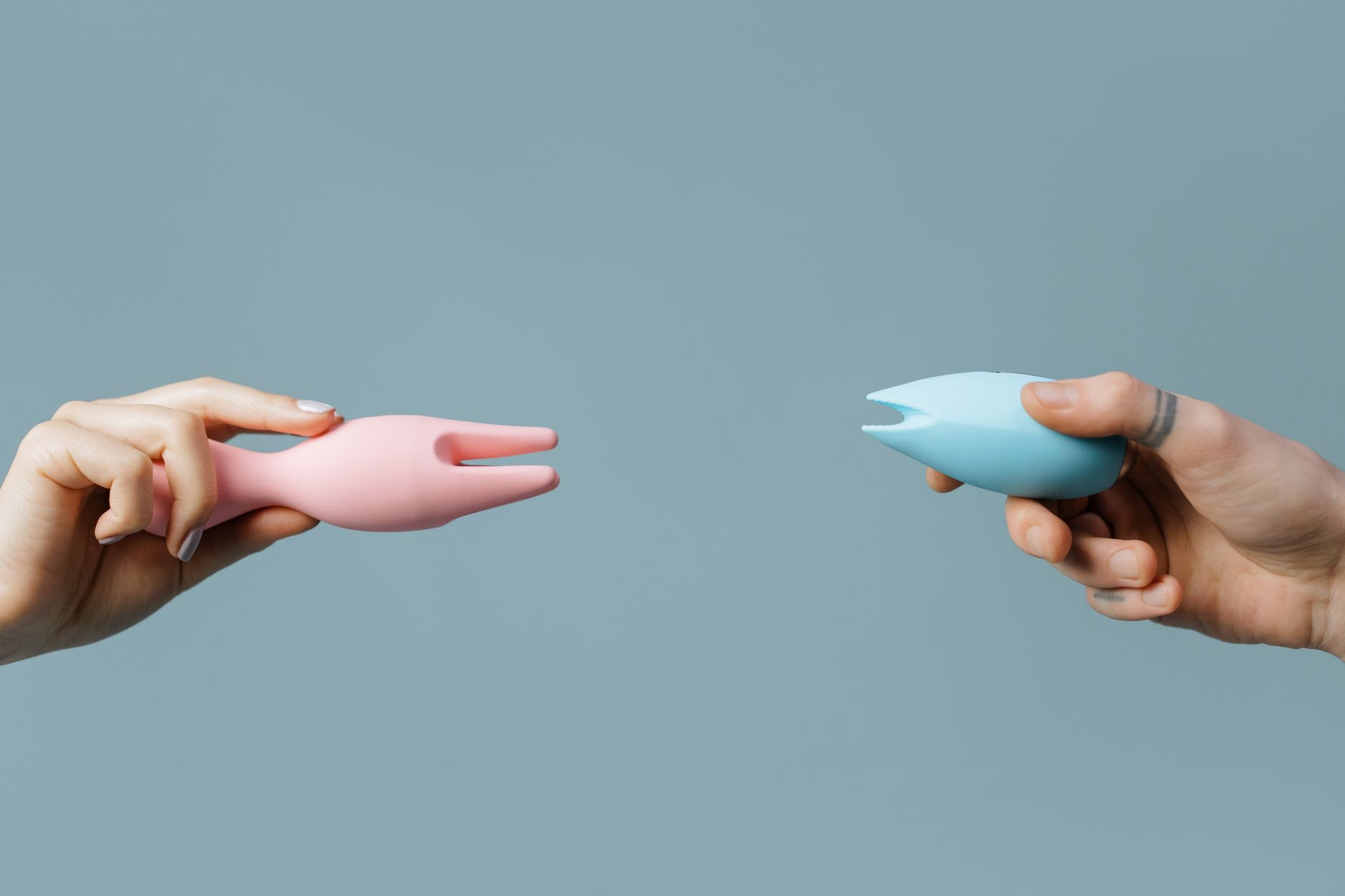
Let's name the thing that's actually bothering you
You're using a lemon vibrator. Maybe it's daily. Maybe it's the first thing you reach for when you have fifteen minutes alone. And somewhere in your head, a voice is asking: is this too much? Am I becoming dependent? Should I be using it less?
Honestly, that voice isn't coming from your body. It's coming from decades of messaging that solo pleasure should be occasional, almost apologetic. That real desire is partnered desire. That if you're reaching for your lem vibrator more than once a week, something's gone wrong.
None of that is true. And the guilt you're carrying around frequency? That's worth examining separately from the actual question of whether your pleasure practice is healthy.
What dependency actually looks like
Let's start with the science because it matters. There's a real clinical concern called anorgasmia, which is the inability to reach orgasm even with adequate stimulation. Some people worry that regular vibrator use causes this. The research says otherwise. Multiple studies on vibrator use show zero evidence of desensitization or addiction.
What does happen: your nervous system gets better at recognizing the specific pattern of stimulation a lemon vibrator provides. This isn't dependency. It's learning. Your body learns that this particular rhythm, intensity, and suction pressure equals pleasure. That's not a problem. That's useful information.
Real dependency would look like: you physically cannot feel pleasure without that exact device. You've tried alternatives and genuinely feel nothing. Your body has stopped responding to touch, partnered sex, or any other form of stimulation. This is rare, clinically distinct, and usually tied to medications like SSRIs, not vibrator frequency.
The difference between preference and problem
Here's what I see in my practice: people with a strong, consistent preference for lemon vibrators often feel ashamed of that preference. They think, "If I really loved my partner, I wouldn't need this," or "A normal person would want variety."
Again, not how it works.
Your body has neural pathways that light up for specific sensations. A lemon clitoral vibrator with suction stimulation might activate those pathways more directly than any other single tool you have access to. That's not a character flaw. That's just your wiring.
Preference becomes a problem only if it's creating actual friction in your life. Are you choosing the vibrator over partnered intimacy in a relationship where both people want connection? That's worth discussing with your partner. Are you avoiding social situations or work to use it? That's different. Are you using it daily because it feels good and it's the easiest way to manage stress and pleasure simultaneously? That's actually fine.
The question to ask yourself isn't "Am I using it too much?" It's "Is my pleasure practice supporting my life or getting in the way of it?"
What healthy frequency actually looks like
There is no magic number. Some people use a lem vibrator three times a week and feel fantastic. Others use it daily and feel equally fantastic. Some use it in waves. You might have a period where you're exploring solo pleasure, then shift into a partnered phase, then circle back to solo.
All of these are normal. All of these are healthy, as long as three things are true:
One, you're not using it to numb difficult emotions in ways that prevent you from dealing with them. There's a meaningful difference between "I use my lemon vibrator to manage my anxiety and then I still show up to therapy" and "I use my lemon vibrator to avoid every uncomfortable conversation in my relationship."
Two, you have realistic expectations about what it can and can't do. A vibrator is a tool for pleasure. It's not a relationship fix. It's not a substitute for connection. If you're using it because your partnered sex life has become distant, that's a signal to address the distance, not to increase vibrator frequency.
Three, you're not measuring your pleasure against someone else's standard. Your body, your partner's needs, your relationship structure. None of that is the same as anyone else's.
Building a practice that doesn't trigger shame
If guilt shows up every time you reach for your lemon vibrator, something's off. Not with your body. With the story you're telling yourself about it.
Here's what I recommend: separate the conversation about frequency from the conversation about pleasure. Your body likes what it likes. That's factual. The judgment you're layering on top is learned.
Start by noticing the shame without acting on it. When the voice says, "You're using this too much," don't argue with it. Just name it. "There's the shame. There's the judgment." Then check in with what's actually true. Am I enjoying this? Is it supporting my wellbeing? Is it creating problems in my relationships or my life?
If the answer to the first two is yes and the third is no, you're fine.
If you're partnered, this conversation is worth having explicitly. Not "Is it okay if I use my lemon vibrator?" but "I want to make sure our sex life feels connected and that my solo pleasure time feels okay to both of us. What does that look like?"
Many partners feel relieved to have this conversation. They've been wondering the same thing. Others have been waiting for permission to have solo practices too.
When frequency might actually be a signal
There are real reasons to look at your vibrator use, and they're rarely about quantity.
If you're using a lemon clitoral vibrator constantly but still feel sexually disconnected from yourself, that's worth exploring. You might be chasing sensation without presence. Try slowing down. Spend ten minutes with your body without the vibrator first. Notice what you feel.
If you're using it more frequently because partnered sex has become painful, boring, or coercive, the vibrator isn't the problem to solve. The relationship dynamic is. A vibrator can enhance pleasure. It can't repair a broken foundation.
If you're using it because you've developed a pattern of reaching for it instead of sitting with difficult emotions, that's a different conversation. Pleasure is a tool for managing stress. So is exercise, connection, therapy, rest. If vibrators are your only tool, it's worth building others.
These aren't about frequency. They're about what's driving it.
Making peace with your practice
I've worked with hundreds of people navigating this exact guilt. The shift that happens when they stop measuring their pleasure against an imaginary standard is significant. Suddenly the vibrator stops being a source of shame and becomes what it actually is. A tool that feels good. That's available. That they like.
Your body knows what it needs. The rest is permission. And you don't need anyone else's permission to give it to yourself.
If you're exploring lemon vibrators for the first time and worried about overdoing it, understand this: there's no such thing as "overdoing" pleasure. There's only your body, your needs, and the choices you make. Make them consciously. Make them honestly. Make them without apologizing.
Your pleasure practice doesn't need to look like anyone else's. It just needs to feel good and support your life. Everything else is noise.