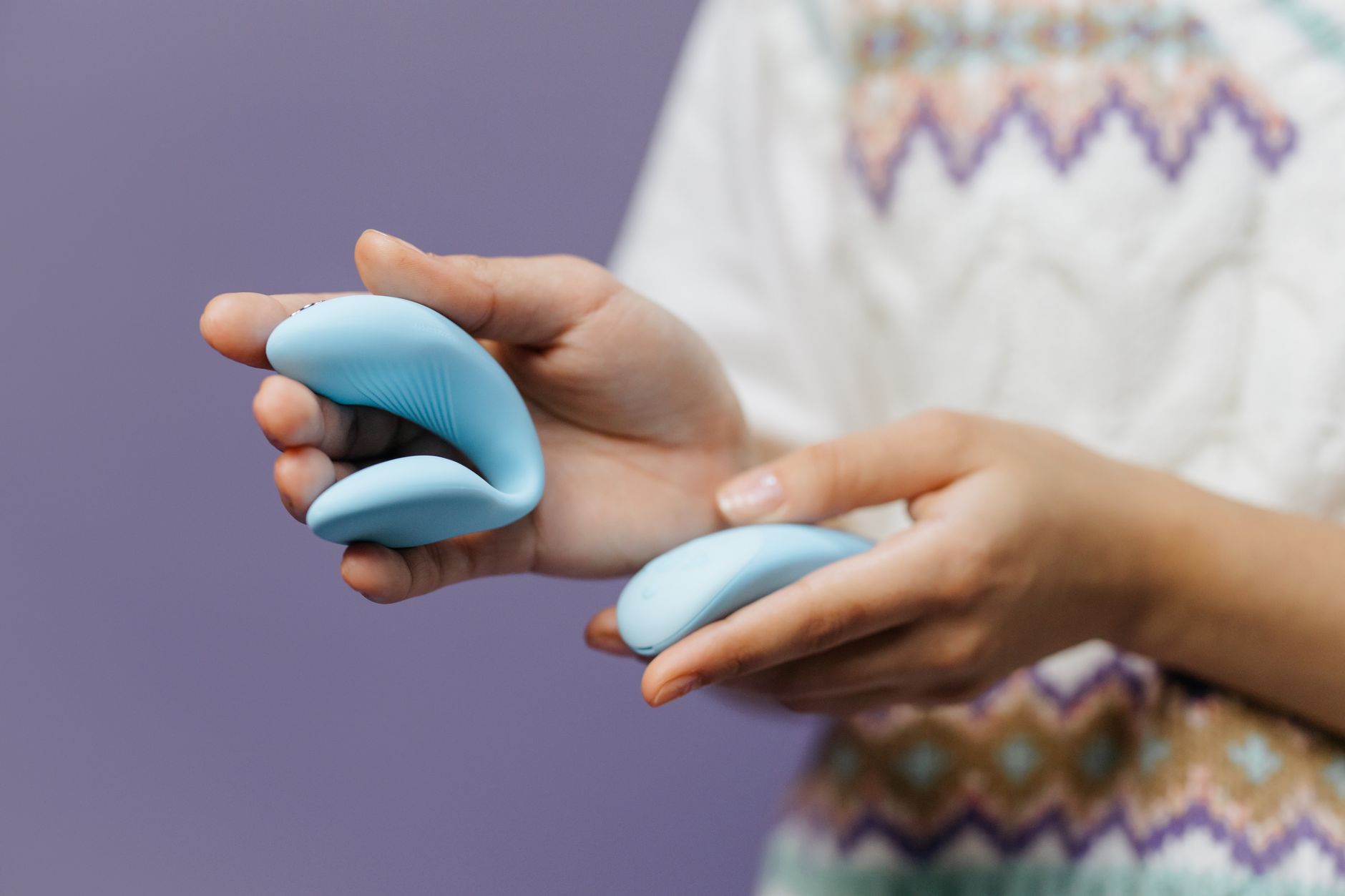
How to Use Lemon Vibrators When Texture Sensitivity Increases With Age
Let's be real. Around 40, your skin starts playing a different game. It gets thinner, loses elastin, becomes more reactive to everything from fabric tags to water temperature. The genital tissue is no exception. And suddenly the texture of things you've been using for years feels almost aggressive.
That doesn't mean pleasure is leaving. It means your body is asking for a different conversation with sensation. And that's actually where lemon vibrators, with their smooth, low-friction design, become quietly brilliant.
The texture shift nobody warns you about
Your skin becomes more sensitive with age in ways that feel contradictory. You lose some sensation depth (which is why light touch sometimes feels numb), but simultaneously you gain reactivity (rough textures feel too intense). It's like your nervous system is turning up the volume and turning down the dial at the same time.
This happens because the dermis thins, collagen breaks down, and nerve endings reorganize slightly. Estrogen plays a role too. Vaginal tissue becomes thinner and drier, which means it's more prone to irritation from friction, fabric texture, or anything with a rough or ridged surface. A vibrator that felt perfect at 35 might feel uncomfortable by 45.
Here's what doesn't change: your capacity for pleasure. The clitoral nerve density stays the same. Your ability to orgasm doesn't fade. You're not losing desire or sensation entirely. You're shifting. And lemon vibrators handle that shift with grace.
Why smooth suction-based design matters when texture becomes the problem
Most traditional vibrators rely on direct friction and texture variation to stimulate. Some have ridges, some have bumps, some vibrate against your skin with a pulsing rhythm that transfers directly through the tissue. When your skin is tactilely sensitive, that direct contact can feel raw or even painful, even at lower vibration settings.
Lemon vibrators work differently. The suction mechanism creates a seal that lifts and gentles the tissue, then releases in a rhythmic pattern. There's no textured surface grinding against sensitive skin. The sensation comes from the suction pulse itself, not from the toy's texture rubbing against you. This is a genuinely different stimulation pathway.
The silicone body of a lemon clitoral vibrator is smooth and non-porous. No ridges. No textured patterns. Just a gentle, glassy surface that your skin doesn't have to work against. For people whose sensitivity has shifted, this feels like someone finally listened.
Micro-adjustments for changing sensation thresholds
Texture sensitivity isn't a binary. It sits on a spectrum. You might feel intense sensitivity to roughness but be completely fine with smooth surfaces. You might find that pressure sensitivity changes throughout your cycle (yes, this continues post-menopause for some). Here's how to match a lemon vibrator to where you actually are.
Start at pattern level 1 or 2, not higher. The suction does the work. You don't need maximum intensity to feel it. In fact, many people find that mid-range suction settings feel more pleasant than intensity-chasing once sensitivity shifts. Level 3 hits different when your tissue is more reactive.
Build warm-up time into your ritual. Gentle stimulation of the outer clitoral area for 2-3 minutes before introducing suction allows blood flow to increase and tissues to soften. This makes your body less reactive to sensation overall. It's not foreplay padding. It's a genuine physiological shift toward comfort.
Use external motion, not fixed pressure. Don't press the lemon vibrator hard against your body and hold it. Instead, move it slowly in small circles around the clitoral area. Let the suction pattern do the stimulation while you control the positioning. This way, you're managing pressure yourself rather than letting a fixed point of contact dominate your sensation.
Materials that work when your skin is finicky
All lemon clitoral vibrators are made from medical-grade silicone. It's non-porous, which means bacteria can't hide in microscopic pits. It's smooth, so there's no texture to irritate. And it warms quickly to body temperature, which paradoxically makes it feel less foreign than cooler materials. For sensitive skin, these qualities matter more than you'd think.
Water-based lubricant becomes even more important when texture sensitivity is high. Not because you're broken or lacking arousal, but because the extra slip reduces the micro-friction between toy and tissue. Choose a thick, creamy formula over thin ones. It buffers sensation in a way that thin lubes can't.
Avoid anything with flavor, warming sensation, or cooling sensation if your skin is easily irritated. Those additives are often the culprit behind discomfort that people mistakenly blame on the toy itself. Stick to unscented, additive-free lubes when texture sensitivity is part of your picture.
What changing sensitivity tells you about your body
Increased texture sensitivity isn't a sign of aging badly. It's a sign that your nervous system is working exactly as designed. Thinner skin is more reactive. That's biology, not decline. And once you stop fighting it and start working with it, pleasure often deepens.
Many people report that using lemon vibrators after texture sensitivity emerges feels more intimate than their earlier experience. You're moving slower. You're paying closer attention. You're feeling more, not less. The pace changes the whole meaning.
If you've been in a long-term partnership, this shift can actually rebuild connection. Your partner might need to adjust how they touch you too. That conversation, awkward as it feels, is where tenderness re-establishes itself.
When to check if sensitivity crosses into pain
Texture sensitivity is normal. Pain is not. If using a lemon vibrator causes sharp pain, burning, or lasting irritation even with lubrication and gentle pressure, that's worth mentioning to a healthcare provider. Genitourinary syndrome of menopause (if you're perimenopausal or post-menopausal) is real and treatable. Lichen sclerosus and other skin conditions can also increase sensitivity past the point of comfortable pleasure.
A quick check: does the discomfort ease once you stop using the toy, or does it linger for hours? Does it happen consistently or only sometimes? That information helps your doctor figure out whether this is normal sensitivity shift or something that needs attention.
Most of the time, it's the former. But it's worth knowing the difference.
Building a texture-friendly pleasure routine
Once you know your skin is more texture-sensitive, you can build a whole ritual around it. Warm baths before play. Specific lubes you've tested. A lemon vibrator set to patterns that feel good to your nervous system, not patterns that theoretically should feel good. Time set aside so you're not rushing. These details transform a potential frustration into a deeply intentional practice.
Your pleasure matters exactly as much at 50 as it did at 25. It just asks for different logistics. And lemon vibrators, with their smooth design and gentle suction mechanism, are practically made for bodies that have become more refined in what they want.
FAQ: Texture sensitivity and lemon clitoral vibrators
Why does my skin feel more sensitive to texture as I age?
Skin thins naturally with age due to collagen breakdown and decreased cell turnover. The dermis loses elasticity, and nerve endings reorganize, making the skin more reactive to roughness while potentially losing some depth of sensation. This is especially true for genital tissue, which is thinner and more hormonally responsive than other skin on your body. It's not a flaw. It's a predictable shift.
Will a lemon vibrator feel different if I have texture sensitivity?
Yes, and usually in a good way. Because lemon clitoral vibrators use suction rather than textured friction, they bypass the roughness problem entirely. The stimulation comes from the suction pulse pattern, not from a textured surface rubbing against sensitive skin. Many people with texture sensitivity report that lemon vibrators feel more comfortable and intense than traditional vibrators.
Can I use the highest suction settings if my skin is sensitive?
You can, but you don't need to. Many people find that once texture sensitivity appears, lower and mid-range settings feel more pleasurable than maximum intensity. The suction mechanism at level 2 or 3 stimulates the nerve endings just as effectively without the sensation overload. Start lower and only increase if it genuinely feels better to you, not because you think you should.
What lubricant should I use with a lemon vibrator if my skin is reactive?
Stick to thick, unscented, additive-free water-based lubricants. Thin lubes don't provide enough buffering when skin is reactive. Avoid anything with flavor, warming, cooling, or other sensations. Those additives are often irritants disguised as enhancements. A good quality water-based lube is all you need and all your sensitive skin wants.
Is increased texture sensitivity a sign that something is wrong?
Not necessarily. Some texture sensitivity is a normal part of skin aging. But if sensitivity comes with pain, lasting irritation, visible changes to the skin, or discharge, mention it to your healthcare provider. Conditions like genitourinary syndrome of menopause (GSM) or lichen sclerosus can increase sensitivity and are highly treatable. It's worth knowing the difference between normal aging and something that needs medical attention.
How do I know if a lemon vibrator is right for my sensitivity level?
Lemon vibrators are generally better for texture-sensitive skin because the suction design removes textured friction from the equation. If you've found that ridged or bumpy vibrators irritate your skin, a lemon clitoral vibrator is worth trying. Start with lower suction settings and build from there. Pay attention to how your body responds over a few sessions before deciding if it's the right fit.
The long view on aging and pleasure
Texture sensitivity isn't the end of pleasure. It's information your body is offering about what feels good now. And when you listen instead of fight, pleasure often becomes more focused, more intentional, and honestly more satisfying.
Lemon vibrators work beautifully with that shift. They're smooth, gentle, and surprisingly intense without relying on harsh texture or aggressive friction. For bodies that have become more refined in their wants, that matters.
Your pleasure doesn't dim with age. It just asks you to pay closer attention. That's not a compromise. That's an upgrade.