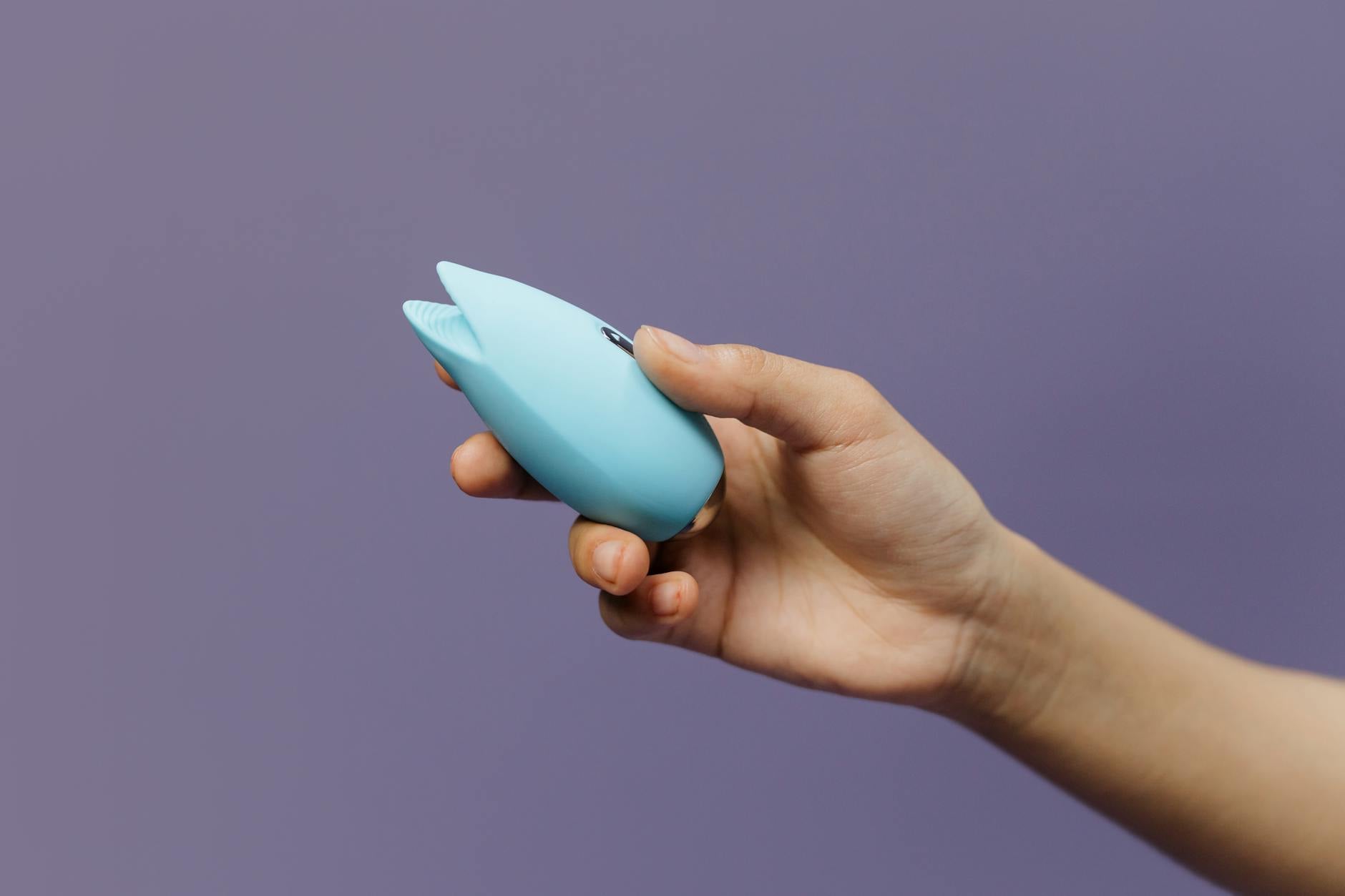
Let's talk about the timing mismatch nobody plans for
Honestly, this is one of the most common friction points couples never mention out loud. Your partner finishes in ten minutes. You need twenty or thirty. One of you is frustrated, the other is feeling pressure to speed up or guilt for slowing things down. Both of those feelings are relationship poison.
Here's what I see clinically: people often assume orgasm timing is fixed, like a personality trait. It's not. It's learnable, adjustable, and absolutely resolvable with the right approach and tools. Lemon vibrators, specifically, change the equation because they let you control your own arousal curve independently.
Why your timelines don't match (and it's not about love)
Orgasm speed depends on several overlapping factors that have nothing to do with how much you care about someone.
Neurological wiring. Some people have a shorter distance between "turned on" and "orgasm." It's partly genetic, partly learned over years of solo sessions. If your partner learned to orgasm quickly early on, their nervous system is literally trained for speed.
Arousal threshold. You might need more mental focus, more physical buildup, or different stimulation patterns to reach the same point. This isn't better or worse. It's just different hardware.
Distraction capacity. Some bodies are more sensitive to environmental noise, partner movement timing, or performance anxiety. If your partner gets absorbed easily and you're monitoring the moment, you'll naturally fall out of sync.
Medication and hormones. Antidepressants, birth control, and stress all shift arousal speed. If one of you recently started something new, the timing gap might have appeared recently for a very biological reason.
The mistake couples make is treating the faster person's timeline as "normal" and the slower person's as "the problem." That's backwards. You're not broken. You just need a different pathway to the same finish line.
How lemon clitoral vibrators reset the game
Lemon vibrators, including the Lem, work differently than traditional vibrators because of suction technology. That matters here because suction stimulates the entire clitoral network, not just the external tip. You get arousal buildup faster and more reliably, which means you can reach your own peak on your timeline instead of chasing your partner's.
The other advantage: control. When your partner is involved, you can use a lemon vibrator solo to get yourself to a point where you're ready to sync, then move into partnered sex from a place of momentum instead of scrambling to catch up. This removes the performance anxiety that kills arousal for most people.
The practical sequence that works
There are three main approaches depending on what feels natural for your dynamic.
Approach one: Pre-sex solo warmup. Spend 10 to 15 minutes alone with a lemon vibrator before your partner joins. Get yourself to about 70 to 80 percent arousal. When you transition to partnered sex, you're already in motion. Your partner's speed doesn't dictate your timeline anymore. You're meeting in the middle.
Approach two: Parallel solo time. If you both want to be present together the whole time, try this. You start with a lemon vibrator while your partner touches you or themselves. There's intimacy and connection, but you're building arousal independently. When you're both ready, you shift into partnered sex. The suction from a lemon clitoral vibrator feels wildly different than fingers, so you're not comparing or competing. You're both just enjoying.
Approach three: Integrated use. Some couples find that keeping the lemon vibrator in play during sex itself solves the timing gap. Your partner enters or touches you while you use the vibrator on your clitoris. This gives you direct control over your arousal speed without either of you having to change rhythm. The stimulation is completely separate, so your partner's pace doesn't interrupt yours.
Why pressure kills arousal (and how to remove it)
Here's something couples therapists see constantly: when the faster partner feels like they're waiting, they get anxious. When the slower partner feels like they're holding things up, they panic. Both people tense up. Orgasms get harder, not easier.
Lemon vibrators help because they externalize the work. Instead of "I need to come faster to keep my partner interested," it becomes "I'm using this tool to build my own arousal at my own pace." That shift from pressure to autonomy changes everything neurologically.
I also recommend reframing the conversation with your partner entirely. Instead of "I take too long," try "I want us to explore a way for me to get there without me feeling rushed." That's collaborative, not shameful. It opens up solutions instead of closing them down.
The timing sync that actually works
Once you both understand your individual arousal curves, timing becomes a choice, not an accident.
Most couples who solve this discover a new rhythm: the faster partner learns to extend pleasure by staying with slower stimulation first, or by using specific techniques that let them build arousal again after an initial peak. The slower partner learns to trust that their timeline isn't holding anyone back once they're using lemon vibrators to manage their own arousal.
Some couples report that the faster partner actually becomes more interested once they're not the one managing the whole experience. There's less pressure on them to carry the encounter. Everyone gets to enjoy.
When to bring this up (and how)
The conversation matters as much as the solution. Timing mismatches get defensive fast because people mistake them for attraction issues. They're usually not.
Pick a calm moment outside the bedroom. "I've been thinking about us, and I want us both to feel good without anyone feeling like they're in a rush. I found something I want to try together." That's it. You're not blaming, not shaming, just problem-solving.
If your partner is hesitant about introducing a lemon vibrator, that's often not about the tool. It's about feeling like their pleasure isn't enough for you. Address that feeling first. "This isn't about you. It's about me being able to relax and enjoy without worrying about timing. It'll actually help me be more present with you."
Most partners soften once they understand the real goal: pleasure for both of you, not interference with what's already working.
FAQ
Can a lemon vibrator really speed up arousal?
Yes. Suction stimulates more of the clitoral network than traditional vibration alone, which typically builds arousal faster for most people. That said, "faster" is still relative to your baseline. You're not becoming a different person. You're optimizing your own curve.
Will using a lemon vibrator make my partner feel replaced?
Not if you frame it correctly. The goal isn't to replace your partner. It's to manage your own arousal so you can be more present and responsive with them. Most partners appreciate that because it takes pressure off them to be the only source of your pleasure.
What if my partner still feels threatened?
That's worth exploring separately from the tool itself. Sometimes timing mismatches surface bigger stuff around insecurity or control. If your partner is consistently resistant to anything that involves your independent pleasure, that might be worth talking through with a couples therapist. I can point you toward resources if that feels true for you.
How long does it usually take to feel more in sync?
Most couples report a noticeable shift within 3 to 4 sessions of trying this intentionally. Your nervous system needs a few repetitions to learn the new pattern. By week two, it usually feels natural.
Should we use lemon vibrators every time we have sex?
No. Some sessions you'll want to. Other times you won't need it. The point is that it's an option that removes the pressure and gives you agency. Once you both trust that you can sync, sometimes you will without any tools at all.
What if I still can't come even with a lemon vibrator?
Then the timing gap isn't actually your core issue. Sometimes what feels like a timing problem is actually something else. Low desire, medication side effects, or disconnection in the relationship itself. A lemon vibrator helps when the mechanism is working but the rhythm is off. If the mechanism itself isn't working, you might need to explore that separately or talk to a healthcare provider.
The real shift
Orgasm timing mismatches feel like a sex problem, but they're usually a communication and autonomy problem wearing a sex-shaped disguise. Lemon vibrators help because they give you a concrete way to take ownership of your own pleasure. Your partner doesn't have to manage it. You don't have to chase it. You both get to enjoy.
If you want more support on this, we're here to help. Reach out at /contact and let's talk about what would actually work for your dynamic.