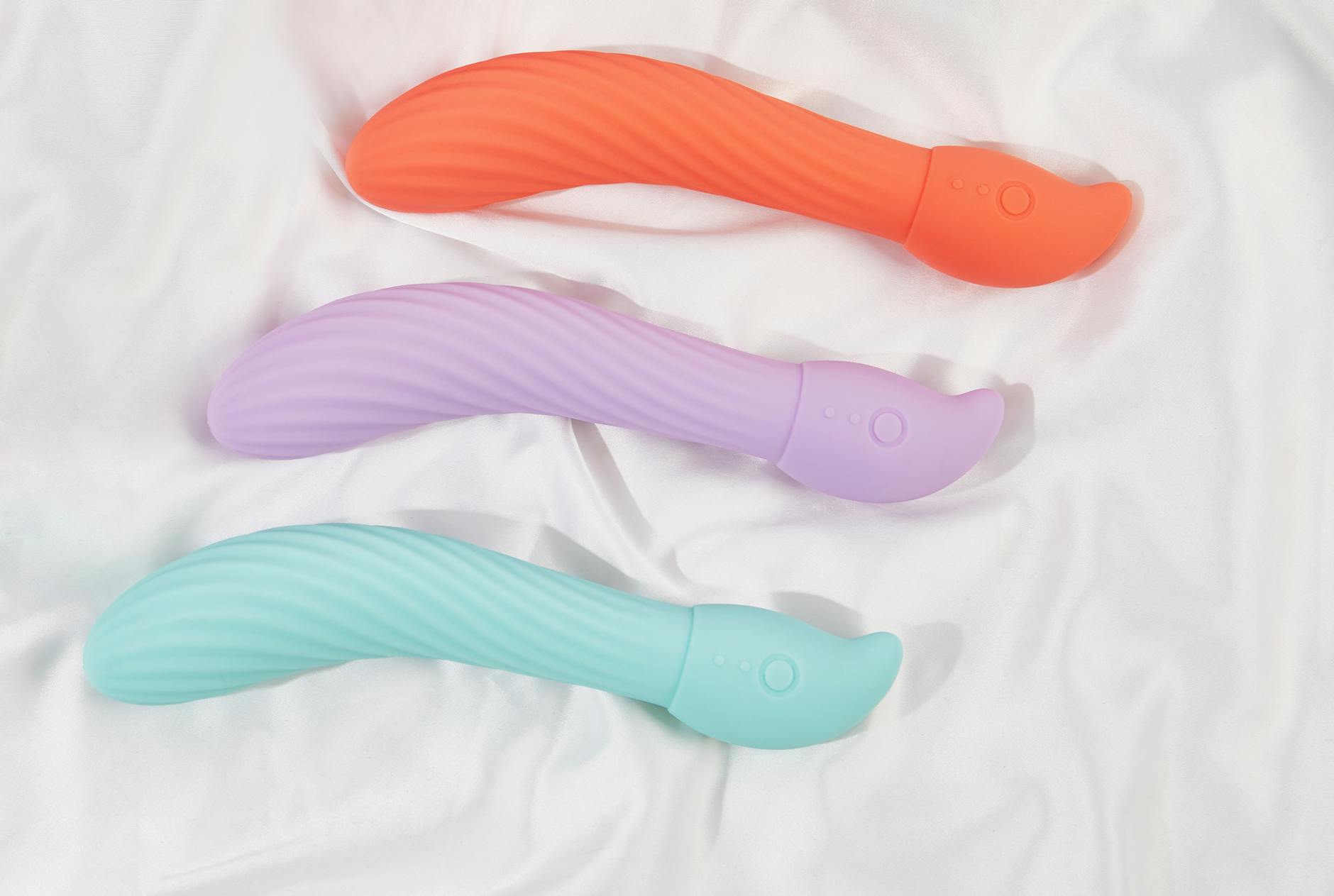
The suction tech works differently in two bodies
Honestly, this is the plot twist nobody talks about. Lemon vibrators feel almost like a different toy when you're using them alone versus with a partner. It's not just psychological. The angle changes. The build-up changes. Even the sensations your partner can trigger change. Understanding this gap is what separates mediocre partnered play from the kind that actually works for both of you.
I've worked with hundreds of couples navigating this exact transition, and the ones who win are the ones who treat solo and partnered play as two separate skills, not the same skill plus an audience.
Solo play: The control advantage
When you're alone with a lemon clitoral vibrator, you have three things partnered play doesn't give you. One, total angle control. You can adjust pressure, approach, and suction depth in real time without negotiating. Two, rhythm ownership. You're not waiting for a partner's hand to sync with your arousal state. Three, pressure freedom. You can go as hard or soft as you need without worrying about feedback or performance.
Most people use lemon vibrators more intensely when solo. You're not moderating sensation for someone else's comfort level. You can go from pattern 1 to pattern 5 in seconds. You can hold suction at the exact angle that works, not the angle that looks good or feels good for your partner to maintain.
The downside? Solo play can make partnered play feel slower. Your baseline expectation shifts upward. When a partner introduces a lemon vibrator, the hand pressure might feel tentative. The rhythm might not match your solo pace. This is completely normal and completely fixable.
What changes in partnered play
When someone else is holding the device, three variables flip. First, the sensation becomes about connection, not just intensity. The fact that they're learning your body, adjusting to your breathing, responding to your feedback. That builds something solo play can't. Second, the angle becomes collaborative. You're not in total control anymore, which actually forces you to communicate and explore together. Third, speed and intensity become negotiated, which can feel slower at first but creates a kind of intimacy solo play doesn't touch.
Many people find partnered use actually more orgasmic over time, even if it feels less intense upfront. Why? Because someone paying attention to your whole body, not just the toy, changes the equation. They notice what makes you breathe differently. They see the tells before you orgasm. They can vary the approach based on what they're observing, not just what you're asking for.
The communication gap that kills partnered play
Here's where most couples fumble. One person has been using lemon vibrators solo for months. They know exactly how deep the suction should be, which pattern works, how long the warm-up takes. Their partner shows up with the toy and zero reference point for any of it. The person with the solo experience gets frustrated because the partner is too gentle, too tentative, too slow. The partner feels judged and disconnected because nothing they're doing feels right.
The fix is explicit. Tell your partner what you've discovered. Don't make them reverse-engineer your body. Say things like, "I like it when the suction gets deeper," or "I need a few minutes at pattern 2 before we go faster," or "I can feel the difference when you angle it slightly left." This isn't criticism. This is collaboration. The fastest couples I work with are the ones who talk through technique like they'd talk through anything else.
Starting a lemon vibrator conversation with a new partnered dynamic
If you're bringing a Hello Nancy lemon vibrator into partnered play for the first time, frame it as exploration, not instruction. "I've been thinking about trying this together" lands different than "I need you to use this on me the way I do it myself." One opens a conversation. The other creates an exam.
Start with the simplest patterns. Not the strongest ones. Let your partner feel how the toy responds without overwhelming sensation. Let them hold it and experiment while you give quiet feedback. "A little higher," "Stay there," "Slower." Keep sentences short. Long explanations break the mood and turn sex into a tutorial.
The first few times might not be your best orgasms. That's fine. You're calibrating together. Once they understand the physical landscape, the sensation becomes richer because it's collaborative.
When solo preference signals a bigger conversation
Sometimes one person consistently prefers solo play with a lemon vibrator and actively avoids partnered use. That's worth unpacking, but not during sex. If someone retreats from partnered play, there's usually something underneath that sex toy technique won't fix. It might be trust. It might be feeling unseen. It might be a control thing. It might be that solo play has become a way to avoid intimacy rather than a complement to it.
This is where couples therapy genuinely helps. I've seen relationships shift completely once the couple stops treating a vibrator preference as a technical problem and starts treating it as data about what they actually need from each other.
The sensory shifts you'll actually notice
When a partner is using a lemon clitoral vibrator on you, your nervous system receives input from two sources at once. The suction sensation from the toy. The touch, pressure, and presence of another body. Your brain integrates both. Some people find this overwhelming at first. Others find it exponentially better.
You might also notice that sensation builds differently. Solo, you're driving the build. Partnered, your partner's attention and energy become part of the buildup. Some people find orgasms come faster this way. Others find they last longer or feel deeper. There's no universal answer, which is why communication matters so much.
Pressure and pacing in real time
One of the hardest things to translate from solo to partnered is pressure. When you're using a lemon vibrator alone, you know exactly how much suction feels right and when to intensify. With a partner, they're guessing. The best approach is to guide in the moment without stopping the rhythm. Instead of "easier," try "stay right there." Instead of "harder," try "I want more suction." This keeps them in the groove rather than making them second-guess.
Pacing is similar. You might discover that your preferred solo rhythm is faster than what feels good partnered. That's not bad. It's just information. Some couples compromise on speed. Some discover they like the slower pace once they try it because it changes how sensation builds.
Building comfort for both partners
If your partner is new to lemon vibrators, normalize their learning curve. They're not just learning the toy. They're learning your body's response to a new sensation. That takes time. The best partnered experiences I see happen when both people agree upfront that the first few times are about exploration, not performance.
It also helps if the person introducing the toy offers solo information without making it prescriptive. "When I use it, I like starting at pattern 2" is helpful. "You have to use pattern 2" creates pressure. One opens possibility. The other closes it.
Rhythm syncing without awkwardness
Listen to your partner's breathing. That's the fastest way to understand if they're building arousal or plateauing. Breathing is honest in a way words sometimes aren't. If breathing is shallow and fast, they're probably getting close. If it deepens or slows, they might need more intensity or a different angle. You don't have to say this. You can just sense it and adjust.
Many partners find that after a few sessions, the rhythm syncs naturally. Your partner learns your body's pace. You learn to trust their hands. It becomes almost telepathic. That's the goal, but it takes patience to get there.
When a lemon vibrator becomes a bridge instead of a barrier
Here's what I tell couples who worry a toy will create distance. The opposite usually happens. A lemon vibrator in partnered play forces conversation. It makes someone pay attention to their partner's body in a new way. It creates permission to talk about sensation openly. Couples who use toys together often report deeper overall intimacy because the toy opened a door to honesty that didn't exist before.
The toy isn't the intimacy. Your presence and attention are. The toy is just a really good way to focus both.
Frequently asked questions
How do I tell my partner I prefer solo play with a lemon vibrator?
Be direct but kind. "I really enjoy using this on my own, and I want to explore partnered use too. Can we try together at a pace we both enjoy?" Avoid making it sound like something's wrong with their touch. Frame it as you wanting to expand your experience together, not replace what you already do.
Does using a lemon vibrator solo too often make partnered play feel less intense?
It can shift your baseline, yes. If you're always going straight to pattern 5, partnered play at pattern 2 might feel gentler. The fix is intentional variety. Some sessions solo at lower patterns. Some sessions partnered at whatever feels good. Your nervous system adapts and so does your partner.
What if my partner wants to use the lemon vibrator on themselves during partnered play?
That's absolutely valid. Some couples use lemon vibrators on themselves while being intimate with a partner. Others take turns. Others use them together at the same time. There's no one right way. Communicate about what you both want and try it.
How long does it take to sync rhythms with a partner using a lemon clitoral vibrator?
Usually two to five sessions. By the third or fourth time, most partners instinctively adjust to your body's response. They learn your tells. You learn to trust their hands. It's not instant, but it happens faster than most people expect.
Can using a lemon suction toy solo make me numb to partnered touch?
Not in the way you might worry. Your sensitivity doesn't decrease. But your expectation of sensation might shift. If you're used to targeted suction, regular hand touch might feel less precise. This is why variety matters. Mix solo lemon vibrator sessions with solo manual sessions. Your nervous system stays responsive to both.
What if partnered play with a lemon vibrator feels awkward or disconnected?
Most couples feel awkward the first time. Awkwardness usually means someone's in their head, worried about performance or judgment. The antidote is communication and patience. Talk about it outside the bedroom. Agree that early sessions are about exploration, not outcomes. Remove the pressure to orgasm or feel a certain way. That usually clears the awkwardness faster than anything else.
The real difference
Solo play with a lemon clitoral vibrator is about knowing yourself. Partnered play is about being known by someone else while you're in a vulnerable state. That's a different kind of pleasure entirely. It's not better or worse. It's just different. The couples who thrive are the ones who treat both as valuable and communicate openly about what each one gives them.
Your pleasure matters in both contexts. So does your partner's presence and attention. When you can talk about both honestly, you get to experience the full range of what these tools can offer.
If you're navigating this conversation with a partner and feeling stuck, that's what we're here for. Reach out. We can help you build the communication and comfort you need to explore together.
Sources
Masters, W. H., & Johnson, V. E. (1966). Human Sexual Response. Little, Brown.
Meston, C. M., & Frohlich, P. F. (2000). The Neurobiology of Sexual Function. Archives of General Psychiatry, 57(11), 1012-1030.
Barakos, G., & Sahay, A. (2020). Intimate Devices and Couple Satisfaction: A Meta-Analysis. Journal of Sexual Medicine, 17(4), 738-755.