The real reason partners say no
It's almost never about the toy itself. A reluctant partner isn't rejecting the lemon vibrator because they don't like innovation. They're usually responding to something deeper: the fear that you want them less, that you're bored, that the toy means something about them has failed. Some partners grew up with messages that toys are weird or shameful. Others worry about performance, or believe that needing external stimulation means their partner doesn't actually desire them.
None of this is rational, and none of it is your job to fix alone. But understanding the actual fear underneath the "no" changes how you approach the conversation.
Start before you even mention the toy
The worst possible moment to introduce a lemon clitoral vibrator is during foreplay, in the heat of the moment, when your partner is vulnerable and can't think clearly. The second-worst moment is when you're frustrated because you've been waiting months to bring it up.
The best moment is neutral territory. A conversation that happens outside the bedroom, when you're both clothed, neither of you is stressed, and there's no pressure to decide anything right now. This might be on the couch after dinner, during a drive, or even in a text thread that he can sit with overnight.
Why? Because when a partner hears about a toy for the first time during sex, the message their brain registers is: "You're not enough." When they hear about it in neutral space with context and reassurance, the message can actually be: "I want to explore this together."
The frame matters more than the pitch
Here's what doesn't work: "I want to use a vibrator because you can't get me there fast enough." That's a performance review wrapped in a sex toy.
Here's what does: "I've been curious about exploring something new together, and I think it could be really fun for both of us. I want to know what you think."
The difference is that the second version frames the toy as an addition, not a replacement. It's about curiosity and partnership, not about his shortcomings. It also explicitly invites his input instead of announcing a decision.
If your partner is particularly anxious about this topic, you might go even softer: "I read something interesting about clitoral vibrators and how they work differently than, like, anything else. I think I might want to try one eventually. No rush, but I wanted you to know that's something I'm thinking about." This gives him time to sit with the idea without feeling put on the spot.

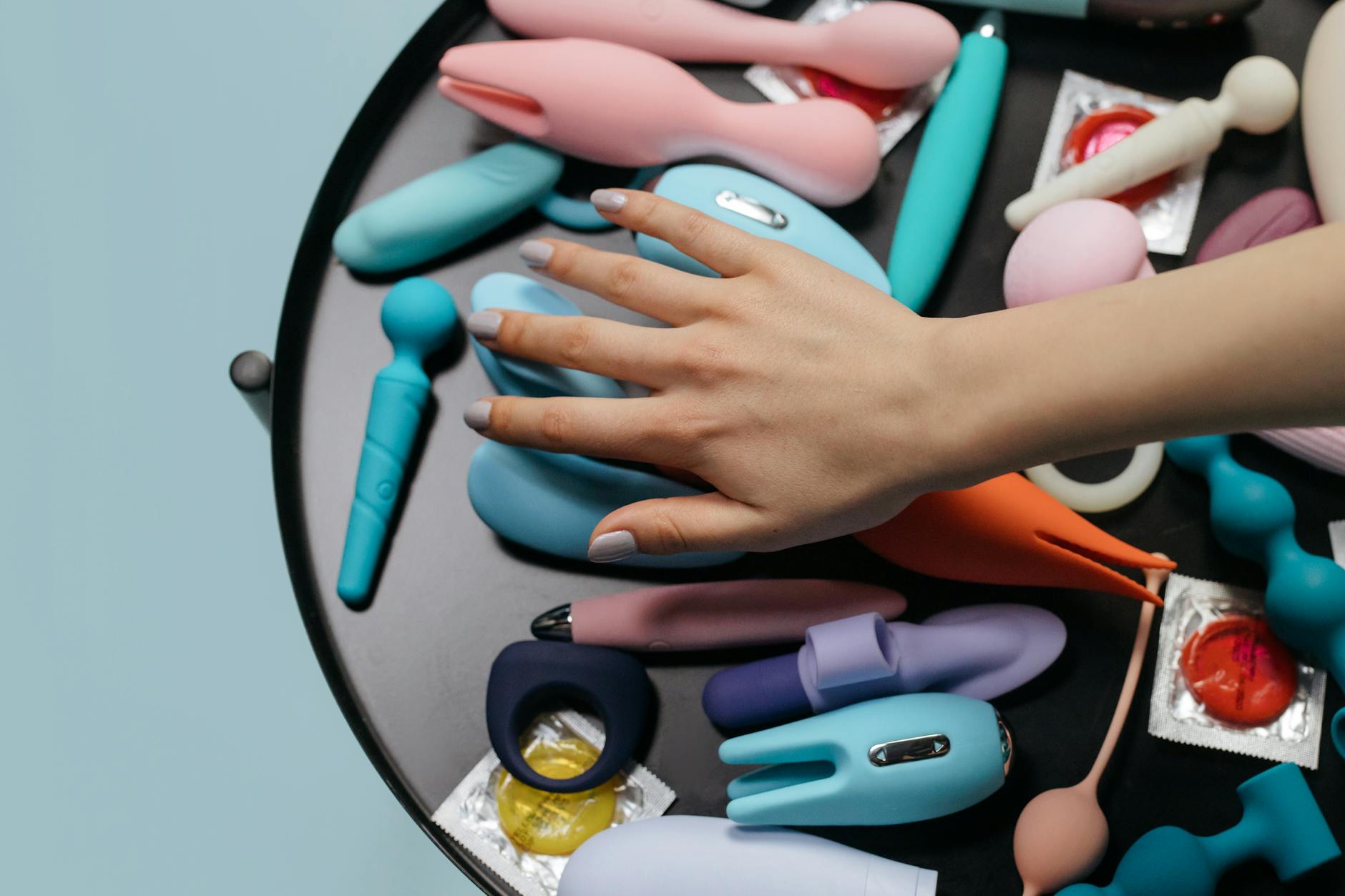
Photo by cottonbro studio on Pexels
What to say when he says "I don't know"
The "I don't know" response is actually progress. It means he's not shutting you down completely. He's just uncertain. That's workable.
Don't push for a decision. Instead, ask what the hesitation is. "What concerns you about it?" or "What would help you feel more comfortable exploring this?" Listen to the actual answer without defending yourself. If he says "I'm worried you'll like it too much and not want me," don't argue. Say: "I get why that feeling comes up. But that's not how this works. I want this with you. Not instead of you."
If he says "I just think it's weird," that's usually code for "I didn't grow up seeing this as normal." Reassure him that weird is fine, and that lots of people use toys in their partnerships. You're not the only couple thinking about this.
If he says he needs time, honor that. Don't bring it up again for at least a week or two unless he does. He's processing something that challenges his beliefs about sex, desire, and his own worth. That takes time.
The gradual introduction strategy
Once he's expressed willingness (even just "maybe"), here's how to move at his pace, not yours.
Phase one: Education without pressure. Send him an article, a short video, or just chat about the science of clitoral vibrators. Maybe mention that lemon vibrators use suction technology, not just vibration, which feels totally different. The goal here isn't to convince him. It's to make the concept less scary and more familiar.
Phase two: Normalize it. Talk about how many couples use toys. Mention a friend or a statistic. Drop it casually into conversation. "I saw that like, 60% of women use vibrators at some point. Kind of makes sense when you think about the anatomy." He doesn't need to know if this came from a real study or not. The point is to make it feel like a normal thing that normal people do.
Phase three: Involve him in the choice. This is powerful because it shifts him from spectator to participant. Show him a few options (not too many, three to five is ideal). The Hello Nancy lemon vibrator is a good starting point because it looks interesting without being intimidating. Let him look at pictures, read reviews, see that other partners are using it successfully. Ask his opinion: "Do you have a preference between these?"
Phase four: The first time using it together. Don't start with both of you present and expectant. Instead, try this: You use it alone or during foreplay while he watches, if he's willing. This removes the pressure on him to "perform" while it's present and lets him see that it's just a tool, not a replacement for him. Many partners who are initially hesitant become curious once they see how it works in real time.
What to avoid
Don't ambush him with it. Don't surprise him with a lemon vibrator in the bedroom without talking first. This will feel like betrayal, not excitement. Don't compare your pleasure to his. Don't say things like "at least the vibrator doesn't take forever." Don't use the toy as punishment for something he's failing at sexually. And don't, under any circumstances, pressure him by saying things like "well, other boyfriends would be fine with this."
Also: don't expect the first time to feel amazing. It might feel awkward, or he might be more nervous than turned on. That's normal. Give it a few tries before you assume it's not working.
How to handle the partner who stays resistant
Sometimes, after you've been patient and kind and educational, your partner still says no. He's not interested. The toy still feels threatening. He's uncomfortable.
At that point, you have a choice to make, and it's worth having with clear eyes. You can respect his boundary and explore your pleasure solo, perhaps in private. You can accept that this particular thing isn't happening in your partnership. Or you can decide that this difference in comfort with pleasure is a bigger compatibility issue that's worth exploring with a couples therapist.
There's no wrong answer here. But there is a wrong move: resenting him silently for the boundary he's set. That resentment will corrode the relationship more than any toy ever could.
Why this matters beyond the toy itself
Introducing a lemon vibrator to a reluctant partner isn't really about the vibrator. It's about teaching your partner that your pleasure matters, that you can ask for what you want, and that vulnerability and desire are things worth protecting in a relationship.
When you're patient with his resistance, when you don't shame him for his hesitation, when you frame this as something you want to explore together rather than something he's failing to provide, you're building trust. You're saying: "I know this is scary for you, and I'm going to move at a pace that works for both of us."
That's the opposite of pressure. That's partnership. And that's usually what makes the difference between a toy that sits in a drawer and a toy that becomes part of how you explore pleasure as a team.
FAQ
How long should I wait before bringing up a lemon vibrator again if he said no?
At least three to six months. If you bring it up sooner, it feels like nagging and confirms his fear that you're obsessed with this. If he's the one who brings it up or shows curiosity (even casual curiosity), that's your signal to re-engage the conversation. Otherwise, give him real time to sit with the idea and let his own curiosity build.
What if my partner thinks I want to use it because I'm not attracted to him anymore?
This is the most common hidden fear. Address it directly and outside the bedroom. Say something like: "I need you to know that this has nothing to do with how I feel about you. I'm attracted to you. I want you. But I'm also curious about my own body and what feels good to me. That's not about you." Then give him space to feel whatever he feels about that. He might need to hear it more than once.
Should I use the lemon vibrator alone first, or wait for him?
It depends on his comfort level. If he's genuinely open but nervous, using it solo first and then showing him how it works removes the pressure to perform while it's present. If he's very resistant, waiting until he's explicitly okay with it shows respect for his boundary. There's no universal right answer, but erring on the side of his comfort usually works better.
What if we try it together and it kills the mood?
That's common. The first time using a lemon vibrator with a partner can feel awkward or clinical. Try it a few times before deciding it doesn't work. Also, don't use it every time. If it becomes mandatory for him to get you there, he might resent it. Think of it as a sometimes thing, not a always thing.
Can I ask my partner to use the lemon vibrator on me?
Absolutely. In fact, many partners who are nervous about vibrators feel more comfortable using one on their partner than using it alone. It gives him agency and a role in the experience. Frame it as: "Would you be interested in trying this on me?" rather than "You should use this on me." The invitation matters.
How do I know if my partner will ever be okay with this?
You don't, not for certain. But you can watch for signs: Is he asking questions? Is he joking about it (humor is often how nervous partners process new ideas)? Is he curious about how it works? Those are good signs. If he's shutting down every conversation, changing the subject, or getting angry when it comes up, that's a sign he might need professional support to work through whatever this is triggering for him. That's when a couples therapist becomes valuable.
The bottom line
Introducing a lemon vibrator to a reluctant partner takes patience, honesty, and a willingness to move at his pace. It's not about convincing him that toys are cool. It's about reassuring him that his worth isn't tied to your orgasm, that pleasure is something you want to explore together, and that asking for what you want is an act of intimacy, not rejection.
When you approach it this way, something interesting happens. The hesitation often softens. He starts to see the toy not as a threat, but as something you value. And sometimes, somewhere down the line, he might even ask to use it with you. That shift from resistance to curiosity is what you're actually building toward. The toy is just the vehicle.